You’re shopping for a brain-support supplement — a “nootropic stack,” meaning a single capsule or packet that bundles multiple cognitive ingredients together — and the label looks impressive. Bacopa. Lion’s mane. Citicoline. Alpha-GPC. All the right names. But buried in the fine print is a two-word phrase that should give you pause: proprietary blend. That label tells you the total weight of a group of ingredients combined, but not how much of each individual ingredient you’re actually getting. It’s a legal, common, and — for a buyer trying to make an evidence-based decision — genuinely frustrating practice. This article audits the most widely purchased pre-formulated nootropic stacks on the market right now, ranks them by label transparency, and gives you a clear framework for deciding whether a product’s dose disclosure is good enough to justify the price.
Why Proprietary Blends Are a Red Flag, Not a Marketing Feature
Supplement brands often frame proprietary blends as trade-secret protection — the idea that if they publish exact ingredient doses, competitors will copy their formula. That argument has some logic. The problem is that it’s indistinguishable, from a label perspective, from a brand that’s hiding the fact that it’s using sub-clinical doses of expensive ingredients to justify a premium price.
Here’s the practical concern: most well-researched cognitive ingredients have a studied dose range — the amount used in the clinical trials that produced the results you’re paying for. Bacopa monnieri, an herb with the most consistent human evidence for supporting memory consolidation, shows meaningful effects in studies using 300–450 mg/day of a standardized extract, per Examine.com’s Bacopa Monnieri Research Summary. Citicoline (also called CDP-choline, a compound that supports acetylcholine production in the brain) is typically dosed at 250–500 mg/day in trials showing cognitive benefit, per Examine.com’s Citicoline summary. If a product lists both ingredients inside a “Cognitive Blend — 400 mg” box, the math alone tells you it’s impossible for either to be at clinical dose. But you’d never know that without doing the arithmetic yourself.
The math problem, plainly:
A proprietary blend listing Bacopa, Citicoline, Lion’s Mane, and Phosphatidylserine at a combined 500 mg total cannot contain even a single ingredient at its studied dose — Bacopa alone needs 300–450 mg.
ConsumerLab’s 2025 cognitive supplement review flagged this repeatedly: products with high ingredient counts and low total blend weights are almost definitionally under-dosed on the ingredients most likely to drive results. The NIH Office of Dietary Supplements’ Dietary Supplement Label Database confirms that blend-weight disclosure is legally sufficient — meaning brands are doing nothing wrong, they’re just doing something that makes comparison shopping nearly impossible.
The Disclosure Spectrum: Where Major Stacks Actually Land
Not every product is equally opaque. Based on published label data and third-party assessments, here’s how the most prominent pre-formulated stacks fall across a transparency spectrum from fully disclosed to fully hidden:
Fully Disclosed (Every Ingredient, Every Dose)
Thesis Personalized Nootropics ($119/month for a monthly supply of four formulas) discloses every ingredient and exact milligram amount on each formula’s label. Their “Clarity” blend, for example, lists Alpha-GPC at 150 mg, Epicatechin at 50 mg, Lion’s Mane fruiting body at 500 mg, and Zembrin (a standardized Sceletium tortuosum extract) at 25 mg — all individual line items. You can cross-reference every dose against the clinical literature independently. That’s rare at this price tier, and it’s one of the primary reasons the brand earns premium trust in practitioner circles.
Momentous Omega-3 Concentrate and their single-ingredient cognitive SKUs (Lion’s Mane, Inositol) also publish full individual doses — though these are single-ingredient products, so there’s nothing to hide. They hold NSF Certified for Sport status, which adds third-party manufacturing verification on top of label accuracy.
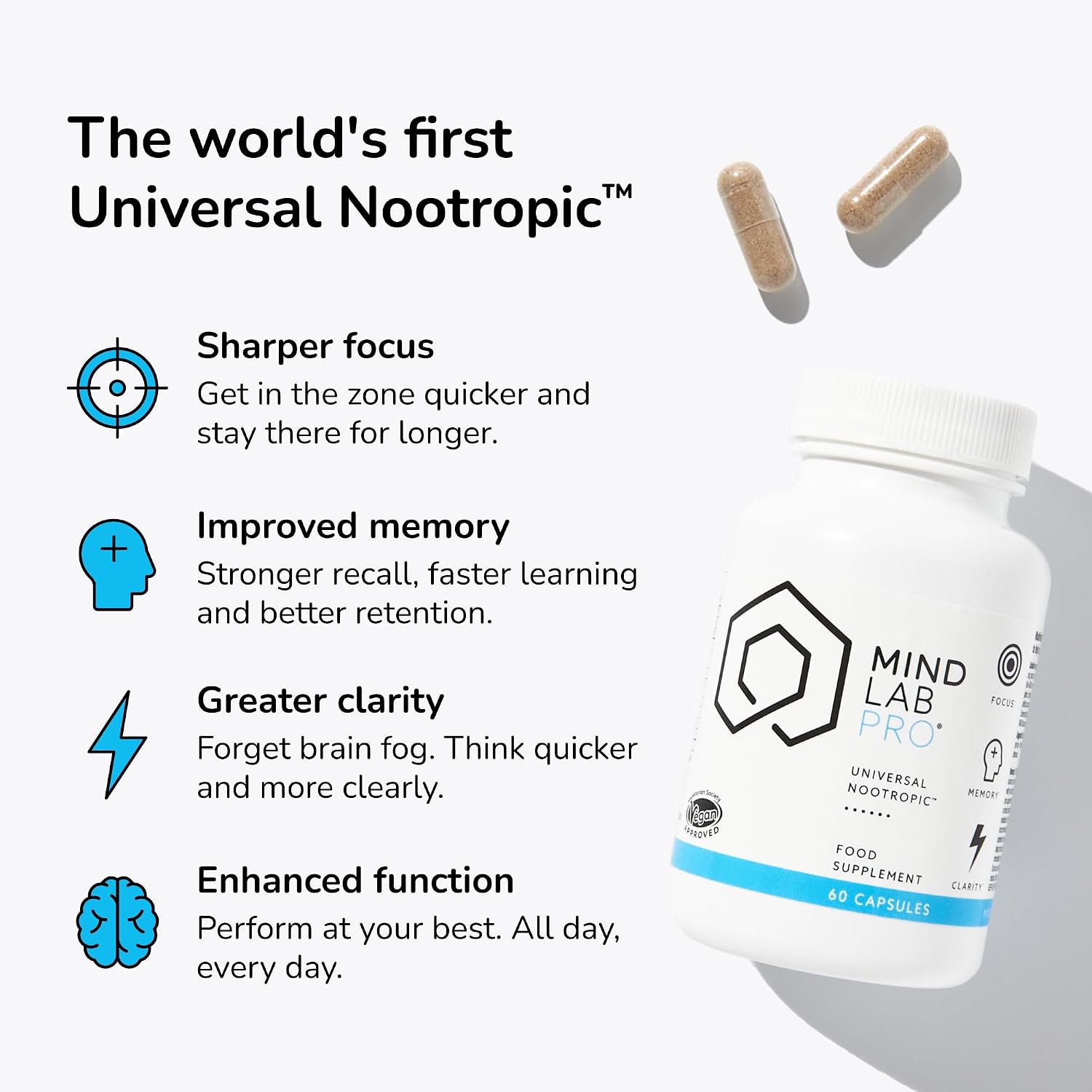
Mind Lab Pro (Universal Nootropic, ~$69–$89/bottle) fully discloses all 11 ingredients with individual doses. Their label shows Citicoline at 250 mg, Bacopa Monnieri extract at 150 mg (standardized to 45% bacosides), Lion’s Mane Mushroom at 500 mg fruiting body, and Phosphatidylserine at 100 mg, among others. Labdoor’s nootropic rankings have consistently noted Mind Lab Pro’s label transparency as above-average for a multi-ingredient stack. The Bacopa dose (150 mg) is at the lower end of the studied range, which is worth noting — but at least you can see it and make that judgment.
Qualia Mind (~$139–$159/bottle retail) is the most complex case in the fully-disclosed tier. It lists 28 ingredients with individual doses. Some are at or above clinical study ranges (Citicoline at 150 mg is on the lower end; Phosphatidylserine at 100 mg is within range). The transparency is real. Whether 28 ingredients at varied doses produce meaningful synergy or just expensive urine is a separate question — but you can evaluate it.
Partially Disclosed (Some Ingredients Hidden in Sub-Blends)
Alpha Brain (~$35–$80/bottle, depending on count) is probably the most discussed example of partial disclosure in the nootropic space. The label shows three proprietary blends: a “Flow Blend” (650 mg total), a “Focus Blend” (240 mg total), and a “Fuel Blend” (65 mg total). Individual ingredients are listed, but without per-ingredient doses. Healthline’s overview of nootropic stacks notes that Alpha Brain’s clinical trial data (Onnit did fund two human trials) used doses that aren’t clearly reproducible from the current label. You can see what’s in it; you can’t verify you’re getting clinically meaningful amounts.
Neuriva Plus (~$30–$50/bottle) discloses Phosphatidylserine (100 mg — fully visible, at a reasonable dose) and Coffee Fruit Extract (100 mg), but bundles additional B-vitamins in without always making the total picture clear. This is a partially transparent product with a modest ingredient list, and the two primary actives are disclosed. For the price tier, that’s acceptable — but it’s not a complex stack.
Fully Hidden (Total Blend Weight Only)
Several Amazon best-sellers in the “brain supplement” category — typically priced $15–$25 per bottle — list 8 to 12 cognitive ingredients inside a single proprietary blend of 600 mg or less. The math is irreconcilable. ConsumerLab’s review process has flagged several of these for containing meaningful concentrations of B-vitamins (which are cheap and verifiable) while almost certainly containing sub-therapeutic amounts of the featured ingredients like Bacopa, Hericium erinaceus (lion’s mane), and phosphatidylserine. These products aren’t necessarily unsafe. They’re just unlikely to produce the effects that motivated the purchase.
By the Numbers: Dose Benchmarks vs. What Stacks Typically Deliver
| Ingredient | Studied Dose Range | Mind Lab Pro | Qualia Mind | Alpha Brain | Budget Blends |
|---|---|---|---|---|---|
| Bacopa Monnieri | 300–450 mg/day | 150 mg ✓ (low) | 300 mg ✓ | Undisclosed | Undisclosed |
| Citicoline | 250–500 mg/day | 250 mg ✓ | 150 mg (low) | Undisclosed | Undisclosed |
| Lion’s Mane (fruiting body) | 500–1,000 mg/day | 500 mg ✓ | 500 mg ✓ | Undisclosed | Undisclosed |
| Phosphatidylserine | 100–300 mg/day | 100 mg ✓ | 100 mg ✓ | Undisclosed | Undisclosed |
Sources: Examine.com ingredient summaries; published product labels as of Q1 2026.
The Fruiting Body Trap Inside Proprietary Blends
One transparency issue that’s specific to mushroom nootropics — lion’s mane, reishi, chaga — deserves its own callout. Mushroom supplements can use either the fruiting body (the actual mushroom cap and stalk, with higher concentrations of active beta-glucans) or mycelium on grain (the root-structure grown on rice or oats, which includes a significant portion of the grain substrate in the final product). The difference matters because fruiting body extracts generally deliver more active compounds per gram — a distinction Healthline’s lion’s mane coverage discusses in detail.
When a proprietary blend lists “Lion’s Mane Mushroom” without specifying fruiting body or extract ratio, you have no way to assess potency. Thesis and Mind Lab Pro both specify fruiting body. Alpha Brain’s lion’s mane sourcing is not clearly specified on the primary label. Budget blends rarely clarify this at all. This is one place where the absence of disclosure is doing real work against the buyer.
The Decision Framework: If X, Then Y
Here’s the practitioner-level decision rule based on everything above:
If your primary goal is verifiable clinical dosing and you’re spending $70+/month on a stack: Insist on full per-ingredient disclosure. Mind Lab Pro and Thesis are the clearest examples of products where you can audit every dose against Examine.com or PubMed before buying. If a brand at this price point won’t show you individual doses, treat it as a red flag equivalent to a proprietary blend in a real estate deal — something is being obscured for a reason.
If you’re evaluating a partially disclosed product like Alpha Brain: Ask whether the funded clinical trials match the current label formulation. Often they don’t. If a brand cites human trials but won’t show you that the current product matches those trial doses, the evidence claim is marketing, not science.
If you’re recommending stacks to clients or employees at scale (corporate wellness or functional medicine context): Third-party certification (NSF, Informed Sport, USP) is non-negotiable, and full dose disclosure is a procurement prerequisite. A product that can’t satisfy both criteria isn’t a professional recommendation — it’s a liability.
If budget is the primary constraint and you’re below $30/bottle: Single-ingredient products from transparent brands will almost always deliver more effective dose-per-dollar than a multi-ingredient proprietary blend at the same price. A standalone Bacopa extract at clinical dose ($12–$18/month) does more verifiable work than a 12-ingredient blend where Bacopa might be present at 30 mg.
The supplement industry’s label rules give brands enormous room to obscure. The brands that choose not to use that room are telling you something meaningful about how they want to compete — on evidence, not marketing. That’s worth paying attention to, and in most cases, worth paying a little more for.
This article reflects editorial analysis of published label data, third-party testing records, and peer-reviewed ingredient research. It does not constitute medical advice. Consult a qualified healthcare provider before beginning any new supplement regimen, particularly if you take prescription medications including SSRIs or stimulants.