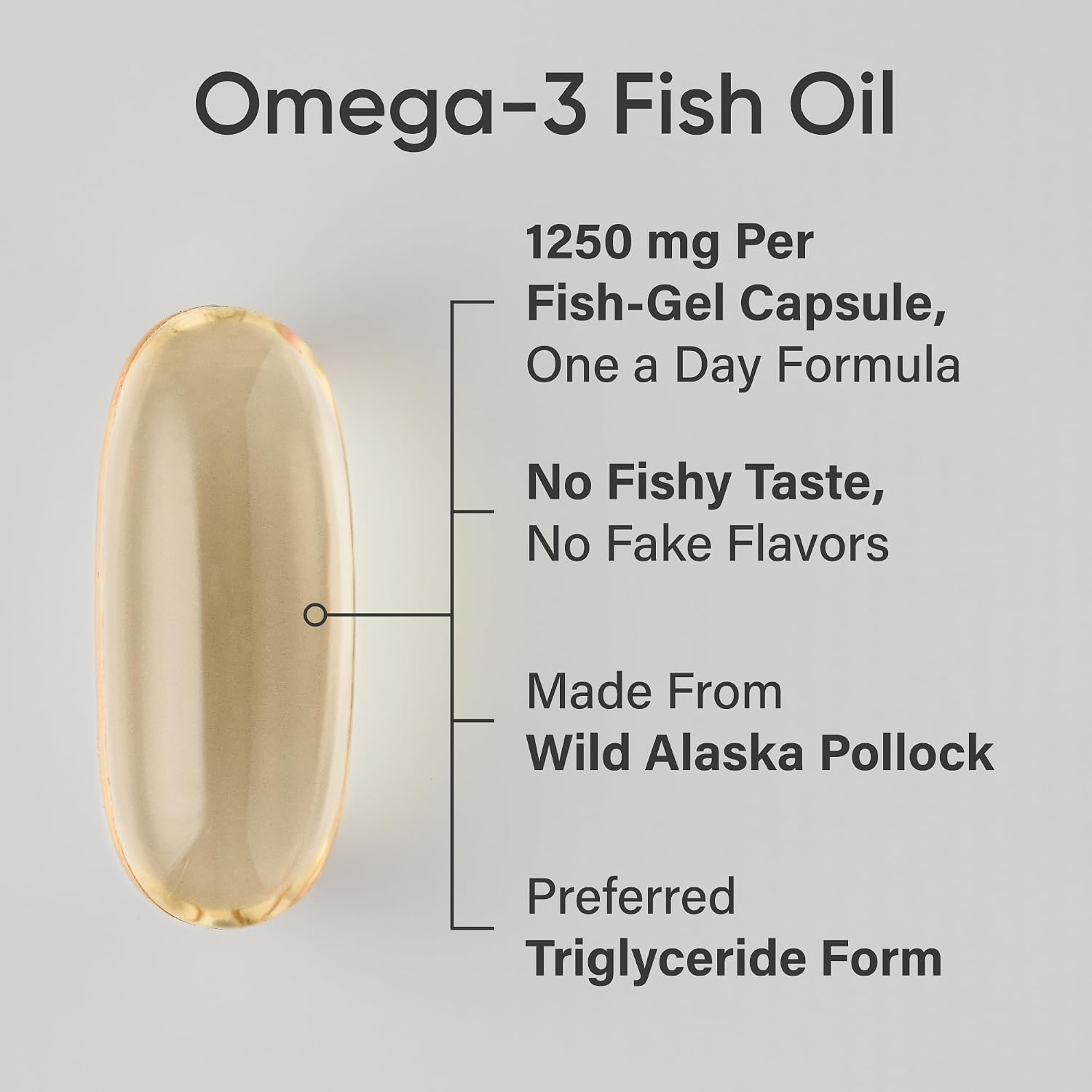
You’ve probably stood in the supplement aisle — or scrolled an endless product page — holding a bottle that says “1,000 mg Fish Oil” on the front. Sounds substantial. But that number tells you almost nothing useful. Fish oil is a fat extracted from fatty fish like sardines or anchovies, and it contains several different types of fatty acids. The two you actually want for brain health are called EPA (eicosapentaenoic acid) and DHA (docosahexaenoic acid) — the specific compounds that research links to memory support, mood regulation, and reduced neuroinflammation. That “1,000 mg” on the label? It’s the total weight of the oil, which includes fats your brain doesn’t particularly care about. The EPA+DHA content is usually a fraction of that — sometimes as low as 300 mg, sometimes as high as 900 mg — and it’s buried in the Supplement Facts panel in small print. This article teaches you the three-step math that cuts through the noise, shows you what clinical dosing actually looks like, and gives you a clean decision framework for spending your money on what works.
Why ‘Total Fish Oil’ Is a Marketing Number, Not a Performance Number
Let’s be direct about what’s happening on most fish oil labels: brands are incentivized to lead with the biggest number that is technically accurate. “3,000 mg Omega-3” reads better than “900 mg EPA+DHA,” even when both describe the same capsule. This isn’t fraud — the total fish oil content is a real number — but it’s designed to imply potency without delivering transparency.
Here’s the structural problem. A standard fish oil capsule is typically composed of:
- Triglyceride-bound fatty acids — the form closest to whole food, generally well-absorbed
- EPA and DHA — the biologically active omega-3s with brain and cardiovascular research behind them
- Other omega-3s (like DPA) and omega-6 or omega-9 fatty acids — present, but with limited independent evidence for cognitive benefit
- Filler fat — yes, some of the capsule weight is just fat that came along for the ride during extraction
The NIH Office of Dietary Supplements’ Omega-3 Fatty Acids Fact Sheet (2024 update) is explicit: EPA and DHA are the forms associated with the bulk of clinical evidence on cognitive and cardiovascular outcomes. DHA in particular is structurally concentrated in brain tissue — roughly 97% of the omega-3 fat in the brain is DHA, according to Examine.com’s EPA and DHA research summary. When researchers study “fish oil and memory” or “omega-3 and depression,” they are almost always dosing subjects with measured quantities of EPA and DHA — not total fish oil.
So when you buy a product based on the “total fish oil” number on the front label, you may be paying for a lot of filler and very little of what the studies actually used.
The Three-Step Label Math Every Buyer Should Run
This is the framework. It takes about 90 seconds with a phone calculator and it changes how you evaluate every product going forward.
Step 1: Find the actual EPA+DHA milligrams per serving.
Flip the bottle. Look at the Supplement Facts panel. Find the line items for EPA (eicosapentaenoic acid) and DHA (docosahexaenoic acid). Add those two numbers together. Ignore the “Total Omega-3” or “Fish Oil” lines for now.
Step 2: Calculate EPA+DHA per dollar.
Divide the total EPA+DHA in the bottle by the price you paid.
Formula: (EPA mg + DHA mg per serving) × servings per bottle ÷ price = mg EPA+DHA per dollar
Step 3: Compare against clinical dosing benchmarks.
The GOED (Global Organization for EPA and DHA Omega-3s) Recommended Intake Guidance Document (2023) cites a general cardiovascular maintenance range of 500 mg EPA+DHA daily for healthy adults, with cognitive and mood-focused research typically using 1,000–2,000 mg EPA+DHA per day. If your product can’t get you to at least 500 mg EPA+DHA at the recommended serving, you’re working against yourself from the start — regardless of what the label’s front panel implies.
By the Numbers: What Good vs. Mediocre Looks Like
| Product Profile | Total Oil/Serving | EPA+DHA/Serving | EPA+DHA% of Total | Typical Price/Bottle | mg EPA+DHA per dollar |
|---|---|---|---|---|---|
| Budget standard fish oil | 1,000 mg | 300 mg | 30% | $12 / 90 softgels | 2,250 mg/$ |
| Mid-tier concentrated | 1,200 mg | 720 mg | 60% | $35 / 60 softgels | 1,234 mg/$ |
| Premium triglyceride-form | 1,500 mg | 1,050 mg | 70% | $55 / 60 softgels | 1,145 mg/$ |
| Pharmaceutical-grade concentrate | 1,000 mg | 900 mg | 90% | $80 / 60 softgels | 675 mg/$ |
Read that table carefully before drawing the obvious conclusion. The budget product delivers the most milligrams of EPA+DHA per dollar spent — but it requires three capsules daily to hit a clinically meaningful 900 mg EPA+DHA dose, which means the bottle lasts 30 days, not 90. Recalculate on a per-month basis, and the gap narrows dramatically. The premium triglyceride-form concentrate, at one or two capsules per day, may actually cost less per month of effective dosing than the budget product taken correctly. Run your math at the dose level, not the per-capsule level.
Concentration, Form, and Third-Party Testing: The Three Variables That Move Price
Once you understand the EPA+DHA-per-dollar baseline, three additional variables explain most of the remaining price spread between products — and all three are worth understanding before you decide how much to spend.
Concentration (Percentage of EPA+DHA in Total Oil)
Standard fish oil runs roughly 18% EPA and 12% DHA — meaning about 30% of the total oil by weight is the active fraction. Concentrated formulas, often labeled as “high-potency” or “ultra-concentrate,” push this to 50–70%+ by running the oil through an additional molecular distillation or ethyl-ester conversion step. Higher concentration means fewer capsules to hit your target dose. Per Healthline’s guide to choosing a high-quality fish oil supplement, concentrated products also tend to have lower peroxide values (a marker of oxidation/rancidity), which is a real quality concern with lower-grade oils stored in warm supply chains.
Molecular Form: Triglyceride vs. Ethyl Ester
This distinction matters more than most brands want to discuss. Natural fish oil is in triglyceride form — three fatty acid chains attached to a glycerol backbone, which is the way your body encounters fat from whole food. Many concentrated products are converted to ethyl ester form during processing because it’s cheaper to concentrate. Ethyl esters are not necessarily less effective — some research suggests adequate absorption, especially when taken with a high-fat meal — but multiple bioavailability studies reviewed on Examine.com show triglyceride-form omega-3s absorbing roughly 50% better than ethyl esters under fasted or low-fat conditions. If you’re buying a premium product and not eating it with food, you’re likely losing a meaningful portion of the benefit. Some manufacturers re-convert ethyl esters back to triglyceride form after concentration (labeled “re-esterified triglycerides” or rTG) — this is the gold standard for both concentration and bioavailability, and it commands the highest prices for legitimate reasons.
Third-Party Testing
ConsumerLab.com’s Fish Oil and Omega-3 Product Review (2025) found that several products on the market either overstated their EPA+DHA content by label, showed elevated oxidation markers, or had detectable PCB contamination above voluntary industry thresholds. Third-party testing programs — specifically IFOS (International Fish Oil Standards), NSF Certified for Sport, and ConsumerLab’s own verified mark — provide independent verification that the label is accurate and the oil is clean. For practitioners recommending products to clients or building a corporate wellness stack, this is non-negotiable: a product without independent verification is a liability claim waiting to happen. For individual buyers, it’s a quality filter worth a modest price premium.
How to Apply This When a Decision Is Already in Front of You
Here’s the decision framework in plain “if X, then Y” form, built for the reader who has a cart or a vendor comparison open right now.
If you’re optimizing for lowest cost-per-month at clinical dose (≥1,000 mg EPA+DHA/day): Calculate monthly cost at the dose you’ll actually take, not the serving size on the label. A “bargain” bottle that requires 3–4 capsules to hit target dose often lands at $18–22/month — comparable to a mid-tier concentrated product at 1–2 capsules daily. Buy the concentrated product; fewer capsules means better adherence, and adherence is the variable most people underestimate.
If you’re recommending to clients or procuring for a wellness program: Require third-party verification (IFOS or NSF) as a baseline filter. Run the EPA+DHA-per-serving number — don’t accept a vendor’s “total omega-3” figure. Triglyceride or rTG form is preferable for populations who may not consistently take the supplement with food. At program scale, the per-unit cost difference between mid-tier and pharmaceutical-grade is usually small enough to absorb in exchange for the liability protection of verified testing.
If you’re in the premium/biohacker segment and optimizing for bioavailability above all: Re-esterified triglyceride (rTG) concentrates — the form used in products like Momentous Omega-3 and Nordic Naturals Ultimate Omega — are your category. Expect to pay $45–80/month at clinical dosing. The marginal bioavailability advantage over a well-chosen mid-tier product is real but modest; the bigger gain is consistency and the assurance that the label reflects the capsule. Worth the spend if cognitive optimization is a line item in your budget, not a compromise.
If the product in front of you doesn’t list EPA and DHA separately: Put it down. A brand that won’t tell you the only two numbers that matter is either hiding a poor EPA+DHA ratio or doesn’t understand why buyers should care. Either way, it’s not a brand worth trusting with a daily supplement. Per the NIH’s guidance, this transparency is the baseline for making any informed omega-3 purchasing decision — and in 2026, there’s no excuse for a quality brand to omit it.
The label math isn’t complicated. It’s just a habit most buyers haven’t built yet, because the industry has trained consumers to read the front of the bottle instead of the back. Flip it over, add EPA and DHA, divide by price, compare at your actual dose. That’s the whole framework. Everything else — molecular form, third-party testing, bioavailability research — layers on top of that foundation once you’ve got a few comparisons under your belt.
Affiliate disclosure: RestoreMemory.com may earn a commission on purchases made through links on this page. Our editorial analysis is independent of those relationships — we recommend based on research, not revenue.