If you’ve ever stood in a supplement aisle — or scrolled through a product page — staring at two lion’s mane bottles priced $20 apart, wondering what you’re actually paying for, this article is written for you. Lion’s mane (Hericium erinaceus) is a white, shaggy mushroom that has attracted serious attention from neuroscientists for its potential to support the brain’s production of nerve growth factor (NGF) — a protein that helps neurons maintain and repair themselves. The compounds most associated with that effect are called hericenones and erinacines, and a separate class of immune-supporting compounds called beta-glucans (complex sugars found in the mushroom’s cell walls that are widely used as a potency benchmark). The catch: many capsules on the market are made from mycelium — essentially the mushroom’s root system — grown on a grain substrate, and they may deliver far more grain starch than active mushroom compounds. This guide breaks down the sourcing difference, shows you what the numbers look like, and gives you a clear framework for picking the right product at the right price point.
Why the Fruiting Body vs. Mycelium Gap Is a Real Sourcing Problem
“Lion’s mane” on a label tells you almost nothing. What matters is which part of the organism was used and what substrate it was grown on.
Fruiting bodies are the actual mushroom caps — the part that looks like a lion’s mane. They are harvested after the fungus has completed its growth cycle, and they naturally concentrate the compounds researchers have focused on: beta-glucans (typically cited at 25–40% of dry weight in quality fruiting body extracts), hericenones, and a complex suite of polysaccharides. Fruiting body extracts, particularly those using hot-water or dual extraction, are what most of the published clinical literature is based on. Examine.com’s Lion’s Mane Mushroom Research Analysis notes that the majority of human-trial evidence relies on standardized fruiting body preparations rather than mycelium biomass.
Mycelium on grain (MOG) is a different story. Mycelium is the fungal network that precedes the fruiting body — and in commercial supplement production, it is typically grown on a grain (usually oats or brown rice) that becomes inseparable from the final dried biomass. The problem: grain is rich in starch, which shows up in analytical testing as “polysaccharides” and can inflate what looks like an impressive label claim. ConsumerLab’s 2024 Mushroom Supplement Review found that several products identified as mycelium-on-grain preparations showed beta-glucan content below 1% of the stated extract weight, while products using certified fruiting bodies consistently measured between 20–35% beta-glucans by dry weight.
The erinacines — compounds associated with NGF stimulation that are synthesized primarily in mycelial tissue, not in the fruiting cap — are the one area where mycelium has a legitimate argument. However, the most frequently cited small human trial, published by Mori et al. in Phytotherapy Research (2009) and indexed on PubMed (National Center for Biotechnology Information, NCBI), used a fruiting body preparation standardized to bioactive content, not a mycelium-on-grain product. The erinacine advantage of pure mycelium extracts remains largely a preclinical story as of mid-2026, as noted in Examine.com’s ongoing evidence summaries for this ingredient.
The takeaway: unless a mycelium product is explicitly grown in a liquid fermentation medium (grain-free) and tested for actual erinacine content, you are almost certainly buying grain starch with a mushroom label.
What Clinical Beta-Glucan Levels Actually Look Like — and How to Spot Them on a Label
This is where label literacy matters most, and where a lot of otherwise savvy buyers get lost.
By the numbers:
| Product Type | Typical Beta-Glucan % | Starch/Alpha-Glucan Content | Erinacine Presence |
|---|---|---|---|
| Fruiting body hot-water extract (8:1) | 20–40% | Low | Low |
| Mycelium on grain (MOG) | <1–5% | High (40–70%) | Moderate |
| Liquid-fermented mycelium extract | 5–15% | Negligible | High |
| Dual extract (fruiting body) | 15–35% | Low | Trace |
Sources: ConsumerLab 2024 Mushroom Supplement Review; Examine.com Lion’s Mane Mushroom Research Analysis; manufacturer certificates of analysis from Real Mushrooms and Nammex-sourced brands.
The number to look for on a label or COA (certificate of analysis — a third-party lab document showing actual contents): beta-glucan content expressed as a percentage of the extract, not just polysaccharides. “Polysaccharides” is the broader category that includes both beneficial beta-glucans and grain-derived alpha-glucans (starch). A label that says “30% polysaccharides” without specifying beta-glucan content should be treated with skepticism — it may be measuring mostly starch.
Per Examine.com’s Lion’s Mane Mushroom Research Analysis, the most reproducible results in human studies used preparations delivering roughly 500–3,000 mg per day of fruiting body extract. The Mori et al. 2009 trial — available for review on PubMed via the National Center for Biotechnology Information — used 3,000 mg per day of whole fruiting body powder in divided doses over 16 weeks in older adults with mild cognitive impairment. Brands that consistently publish beta-glucan-specific COAs and use certified fruiting body material include Real Mushrooms (whose 8:1 extract targets ≥25% beta-glucans per third-party testing) and products sourced through Nammex, a wholesale supplier whose fruiting body certification is used across multiple premium brands.
If a product doesn’t publish a beta-glucan percentage — not polysaccharides, but specifically beta-glucans — contact the brand and request the COA. Any serious manufacturer in 2026 is running this test. If they cannot produce one within 48 hours, that absence of data is itself informative.
Comparing Products by Price Tier: Where the Budget Actually Goes
Understanding the price landscape as of mid-2026 requires mapping cost to actual active-compound delivery, not to milligram counts alone.
Budget Tier ($15–$25)
Mass-market lion’s mane from broadly distributed brands in this range most commonly uses mycelium biomass or declines to disclose substrate and extraction method. Beta-glucan percentages are rarely published, and COAs for this specific metric are seldom available on request. For casual or curiosity-level use, the stakes are low. For anyone attempting to replicate clinical dosing benchmarks from the published literature — the Mori et al. 2009 protocol, for instance — these products are largely unvalidated against the compounds and concentrations used in research. Healthline’s article “Lion’s Mane Mushroom: Benefits, Side Effects, and More” flags this exact gap: the ingredient is promising, but supplement quality variation is wide enough that product choice materially affects whether you are taking what the studies used.
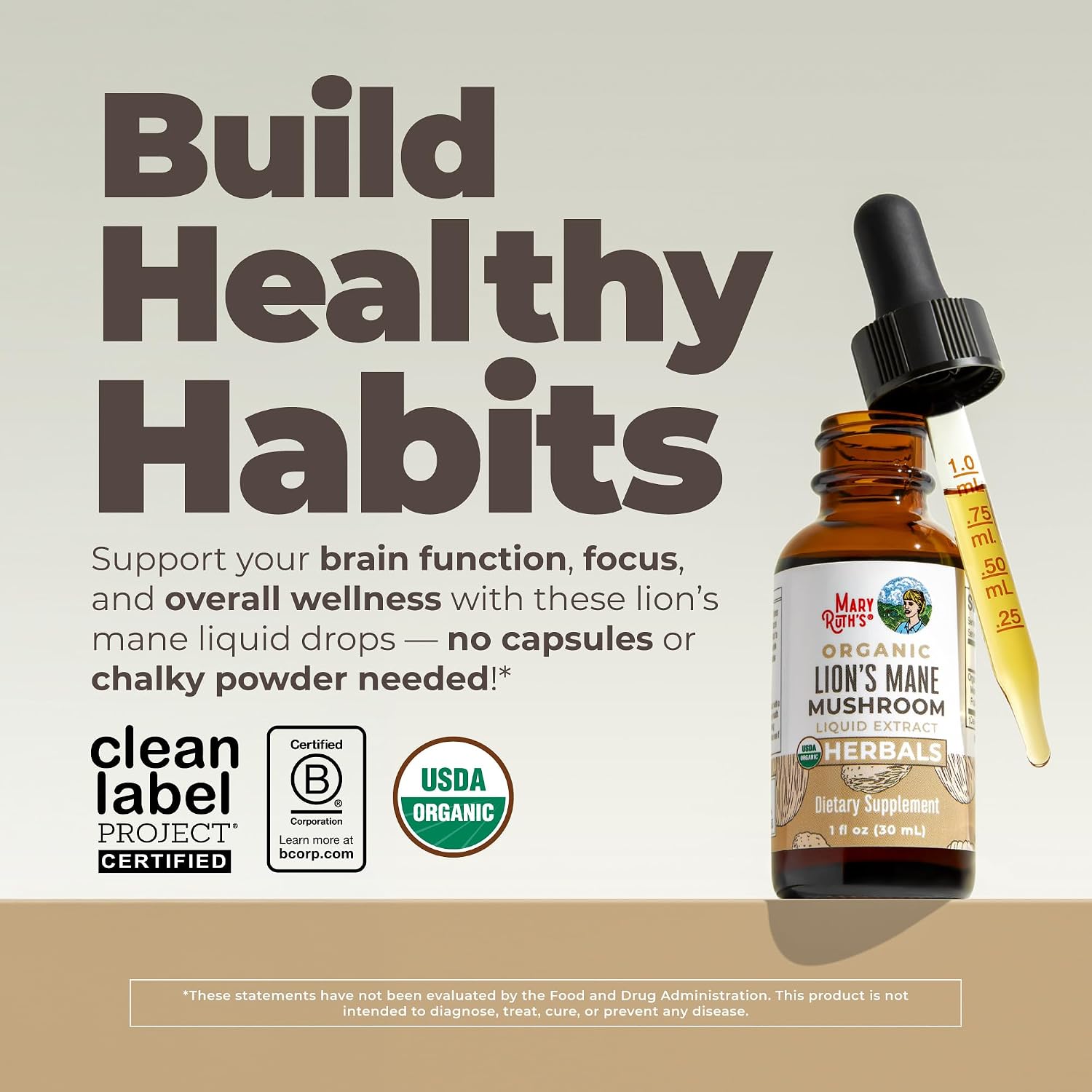
MARYRUTH'S
$21.90
In stock on Amazon
Check price on AmazonMid-Tier ($30–$55)
This is where the category becomes genuinely interesting for practitioners and informed consumers. Real Mushrooms’ lion’s mane capsules — fruiting body, 8:1 extract, COA available on the brand’s website — retail in the $30–$38 range for 60 capsules at 500 mg each. At a clinical dose of 1,000–1,500 mg per day, that is a 20–30 day supply at roughly $1.00–$1.90 per day. Host Defense offers a mycelium-based product using pure mycelium without grain substrate per their stated fermentation process, running slightly higher in cost. Both brands publish third-party testing results and offer meaningfully more label transparency than the budget tier. For most users seeking to align supplementation with the clinical evidence base, this tier represents the best cost-per-effective-dose ratio currently available.
The math that makes this concrete: a product delivering 500 mg of fruiting body extract at 25% beta-glucans provides approximately 125 mg of beta-glucans per capsule. A product claiming 500 mg of “mycelium complex” at 5% beta-glucans — of which some fraction is actually alpha-glucan starch — may provide only 15–25 mg of meaningful beta-glucan content. The cheaper bottle can cost twice as much per unit of active compound.
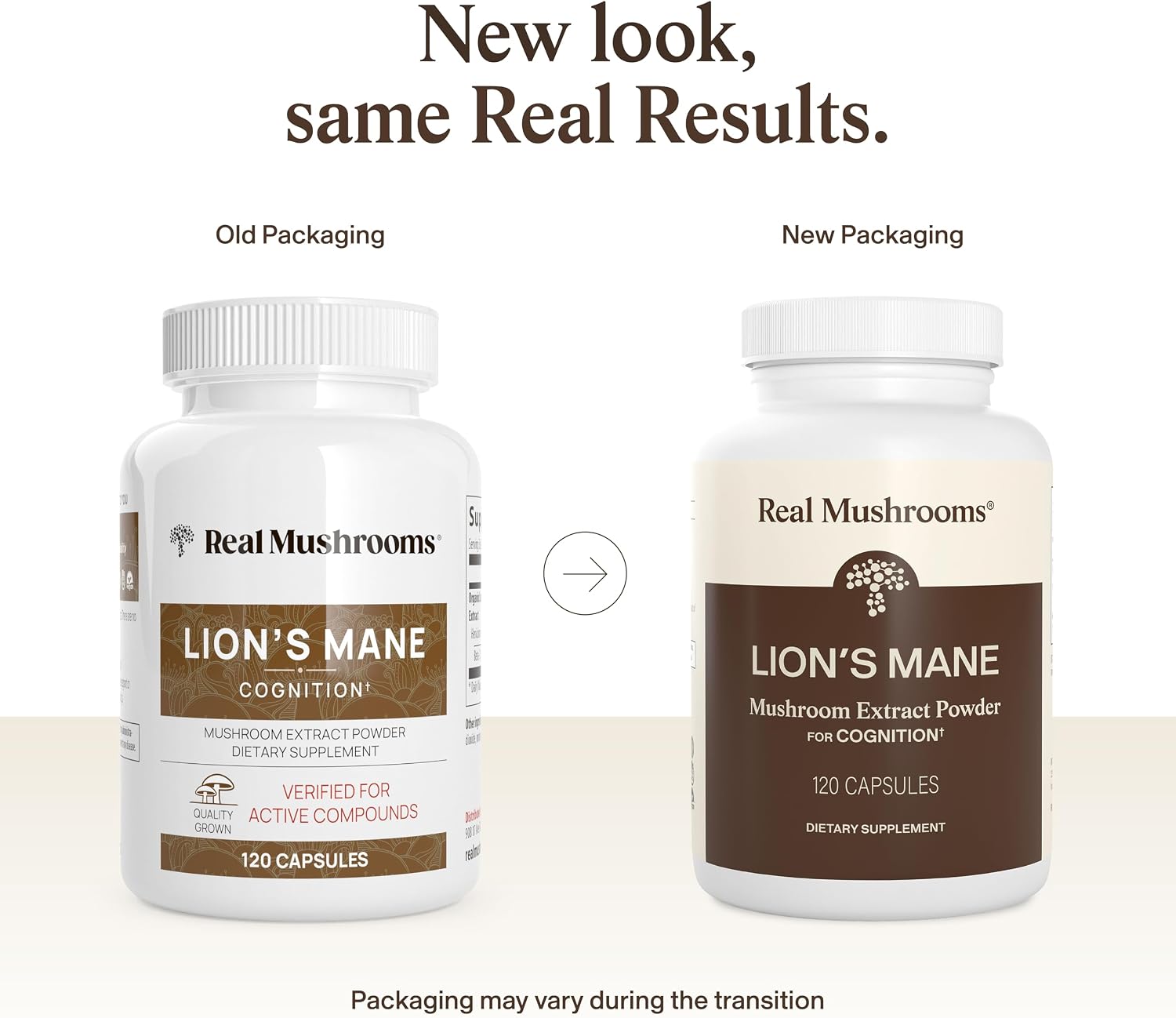
Real
$34.95
In stock on Amazon
Check price on AmazonPremium Tier ($60–$120+)
Stacked formulas from brands in the nootropic category incorporate lion’s mane alongside other compounds — adaptogens, additional mushroom species, and supporting cofactors. At this price, you are paying for the stack design and the brand’s formulation philosophy alongside the lion’s mane milligrams. Scientific American’s coverage of NGF research and the broader nootropic mushroom category notes that compound-combination protocols represent an emerging but not yet well-controlled area of human research: synergy assumptions are plausible but rarely tested in head-to-head trials.
If lion’s mane is your primary target, mid-tier single-ingredient options likely give you a better cost-per-effective-dose ratio. If you want a broader nootropic protocol and have vetted the formulation philosophy, premium stacks can earn their price in convenience and compound variety — provided the brand discloses the specific lion’s mane extract type and milligram dose within the formula. Proprietary blends that list lion’s mane without a dose are a red flag: you cannot determine whether the inclusion is at a meaningful level or a token amount added for label marketing purposes.
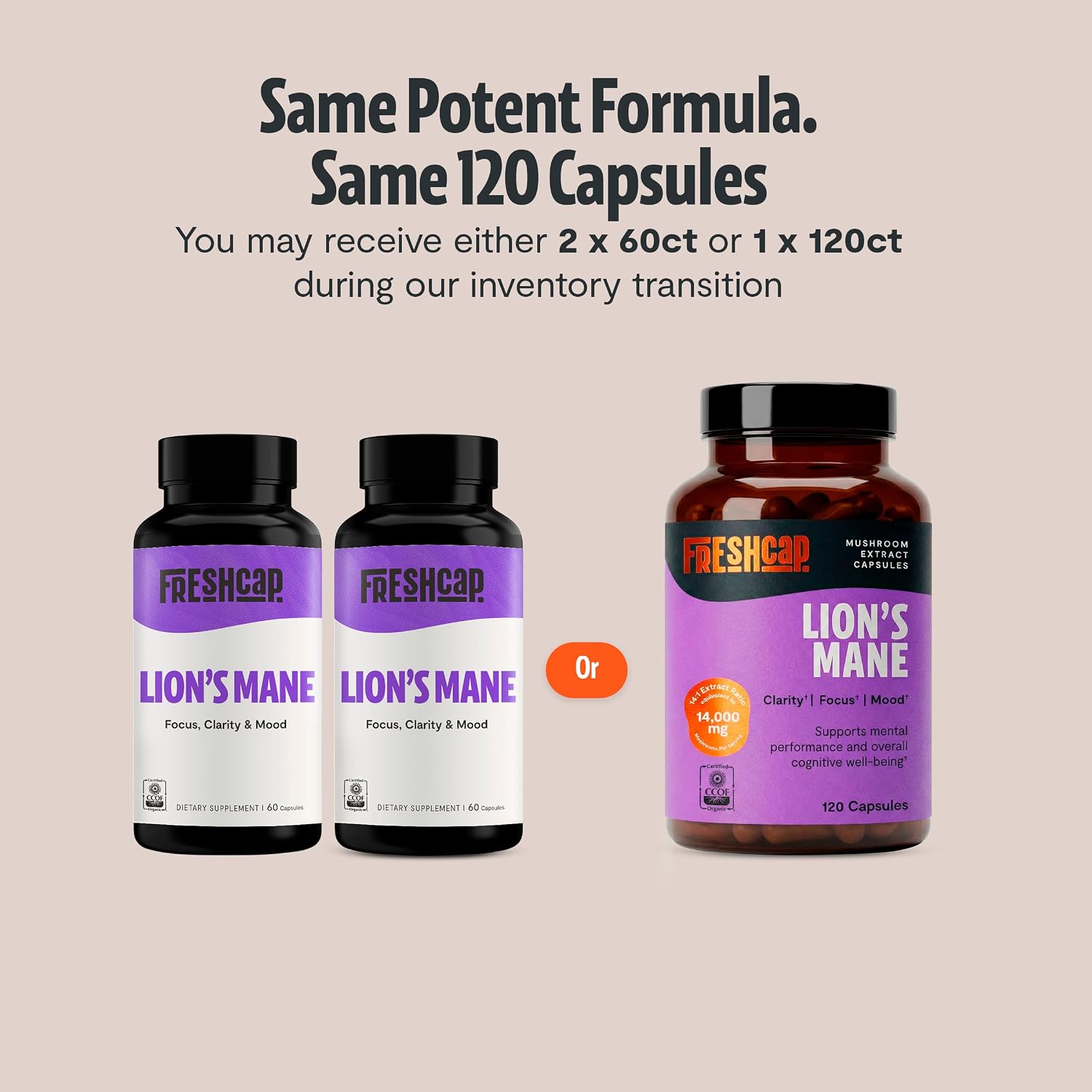
FreshCap
$39.99
In stock on Amazon
Check price on AmazonThird-Party Testing: The Only Verification Layer That Actually Holds
Given that the FDA does not require pre-market efficacy or compositional testing for dietary supplements — as outlined in the National Institutes of Health document Dietary Supplements: What You Need to Know, available at nih.gov — third-party certification is the closest thing to independent quality assurance this market has.
For lion’s mane specifically, the certifications to prioritize in descending relevance:
ConsumerLab Verified — ConsumerLab specifically tests mushroom products for beta-glucan versus alpha-glucan content. Their 2024 Mushroom Supplement Review called out multiple major brands for failing to meet label claims. If a product appears on their approved list, the beta-glucan numbers have been independently confirmed against the label.
NSF Certified for Sport — More relevant for athletes concerned about prohibited substances, but the underlying GMP audits are rigorous and verify that what is on the label is in the bottle at the stated concentration.
Informed Sport — Similar to NSF in rigor, with strong batch-testing protocols and a transparent certification database.
Brand-published COAs from ISO 17025-accredited labs — A credible COA from a lab accredited to ISO 17025 (the international standard for analytical testing laboratories) showing a specific beta-glucan percentage is meaningful evidence even without a formal certification-body stamp on the product label.
What does not count: self-reported “lab tested” claims, in-house quality guarantees, and industry-association certifications without independent accreditation. As Healthline’s lion’s mane overview notes, the supplement category is rife with marketing language that sounds rigorous but tracks no standardized methodology.
The Decision Frame: Matching Product Choice to Your Actual Goal
If you are buying your first lion’s mane and want to replicate what published studies actually used: Choose a fruiting body hot-water or dual extract with ≥20% beta-glucans confirmed on a COA, dosed at 1,000–3,000 mg per day. Real Mushrooms or a Nammex-sourced equivalent is the current baseline. Budget $35–$50 per month at clinical dosing.
If you want the erinacine advantage and are willing to accept earlier-stage evidence: Look specifically for liquid-fermented mycelium extracts — not mycelium on grain — from brands that publish erinacine content on their COA. This is a smaller, less mature product segment with thinner human trial data. Examine.com’s Lion’s Mane Mushroom Research Analysis is the most accessible current summary of where the erinacine evidence actually stands.
If you are recommending lion’s mane to clients or building a wellness protocol at scale: Require ConsumerLab verification or NSF/Informed Sport certification as a non-negotiable. The credibility risk of recommending an unverified mycelium-on-grain product that does not deliver clinical beta-glucan levels is not worth the per-unit cost savings.
If a brand cannot produce a beta-glucan-specific COA on request: Walk away. In 2026, any serious mushroom supplement manufacturer is running this test routinely. The absence of that data is the data.
The lion’s mane category is genuinely promising from a neuroscience standpoint. Scientific American’s coverage of NGF research describes the underlying mechanism as credible and the early human evidence as directionally positive. But the supplement market has layered enough sourcing noise on top of that promise that the label you are buying matters as much as the ingredient name printed on it. The fruiting body versus mycelium distinction, read through the lens of verified beta-glucan content and third-party testing, is the single most reliable signal available. Use it before you buy.