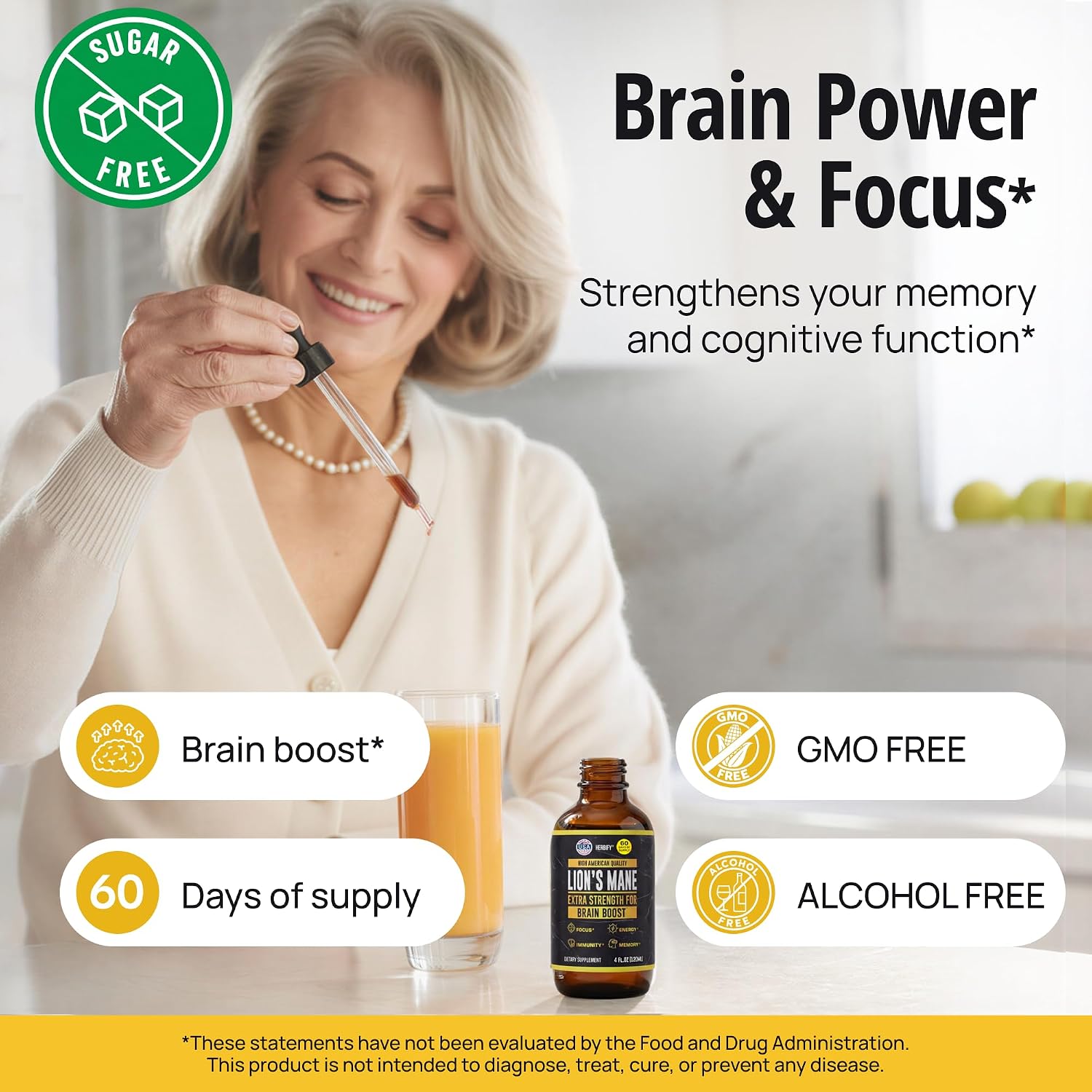
You’ve probably noticed that lion’s mane mushroom — a shaggy white fungus used for centuries in East Asian traditional medicine and now one of the most talked-about nootropic (brain-supporting) supplements on the market — comes in two very different physical forms. There’s the tincture, a concentrated liquid extract that usually comes in a dropper bottle, and the capsule, a powder-filled pill you swallow with water. Both claim to support memory, focus, and nerve health. Both cite the same handful of studies. And both can range from a $15 entry-level bottle to a $60+ premium product.
If you’re at the stage where you’ve already bought your first bottle and you’re now optimizing — trying to figure out whether you’ve been leaving effectiveness or money on the table — this guide is for you. We’re going to get past the marketing language, show you the actual cost-per-dose math, and give you a clear decision rule by the end.
What You’re Actually Paying For: The Two Active Compound Classes
Before comparing formats, you need to know what you’re trying to deliver to your body. Lion’s mane contains two primary compound families that drive its clinical reputation:
- Hericenones — found almost exclusively in the fruiting body (the mushroom part you’d recognize as food). These are the compounds most associated with stimulating Nerve Growth Factor (NGF), a protein your brain uses to maintain and grow neurons.
- Erinacines — found in the mycelium (the root-like network the mushroom grows from). These also show NGF-stimulating activity in preclinical research. According to Examine.com’s Hericium erinaceus Research Summary, erinacines may cross the blood-brain barrier more readily than hericenones, though human pharmacokinetic data remains limited as of 2025.
This distinction matters enormously when evaluating any product because the form of the supplement — tincture or capsule — is downstream of a more fundamental question: Is this product made from fruiting body, mycelium, or a blend of both, and at what concentration?
Neither delivery format automatically guarantees you’re getting the right compounds. A tincture made from mycelium grown on oats (a common, low-cost process) may contain more oat starch than erinacines. A capsule made from certified organic fruiting body at 8:1 extraction may outperform it substantially. The format is secondary to the underlying material — but once you’ve verified the source material, format matters for a different set of reasons.
Comparing by Format: Three Tiers Worth Knowing
Budget Tier: Entry-Level Products in Both Formats
At the $15–$25 price point, you’ll find both entry-level capsules and occasional dropper-bottle tinctures. These products share a common problem regardless of format: they rarely disclose extraction ratios, beta-glucan percentages, or the source material split between fruiting body and mycelium.
Entry-level capsules at this tier frequently use mycelium grown on grain substrate — typically oats or rice — then grind the whole thing, grain and all, into a powder. As Mindbodygreen’s explainer “Fruiting Body vs. Mycelium: The Mushroom Supplement Debate Explained” describes, the result can have high starch content and low functional compound content. Entry-level tinctures at this tier often lack any mg-per-mL disclosure, making dose calculation impossible.
Verdict for budget tier: Unless a certificate of analysis (COA) is available and beta-glucan percentage is stated, budget-tier products in either format are unverifiable. Cost-per-dose calculations cannot be completed without knowing the effective compound load. For most buyers, this tier represents poor value — not because the price is high, but because you cannot confirm you’re buying anything meaningful.
 product image](/images/external/fca9684baeb3.jpg)
MARYRUTH'S
$21.90
In stock on Amazon
Check price on AmazonMid-Tier: Where Transparency Starts and Real Comparisons Become Possible
Mid-tier products — roughly $30–$50 — are where most practitioners and informed buyers settle, because this is the range where reputable brands start disclosing extraction ratios, specifying fruiting body as the source, and providing third-party COAs on request.
Mid-tier capsules at this range typically offer fruiting body extract at 8:1 concentration in 500–1,000 mg per capsule. Examine.com’s Hericium erinaceus Research Summary places the dose range studied in human trials at approximately 500 mg to 3,000 mg of dried fruiting body equivalent per day, with most trials clustering around 1,000–1,500 mg. A mid-tier capsule product delivering 500 mg of 8:1 extract per capsule gives you a 4,000 mg dried-equivalent per two capsules. At 90 capsules for $40, that puts your cost per 1,000 mg dried-body equivalent at roughly $0.44–$0.89 depending on capsule strength.
Mid-tier tinctures at this range present a trickier picture. A quality dual-extract tincture — one processed first with hot water to capture beta-glucans, then with alcohol to capture fat-soluble hericenones — offers a genuinely different absorption profile. Sublingual delivery allows some compounds to enter the bloodstream through mucous membranes, bypassing initial liver metabolism. Healthline’s article “What Are the Benefits of Lion’s Mane Mushrooms?” names sublingual uptake as the primary rationale cited for liquid extracts, though human pharmacokinetic studies specific to lion’s mane hericenones remain limited as of 2025. The dose-flexibility advantage is real: a dropper lets you titrate incrementally, which is useful when starting low and building up.
The concern at the mid-tier tincture level is dose opacity. Many tinctures still list serving size by volume — for example, “1 mL = 1 serving” — without disclosing mg of extract per mL. ConsumerLab’s Mushroom Supplement Review identifies label ambiguity of this kind as one of the most common quality-disclosure failures in the mushroom supplement category across multiple review cycles. Without mg-per-mL disclosure, you cannot calculate a cost-per-dose or confirm you’re hitting a studied dose range.
Verdict for mid-tier: Capsules win on cost-per-dose math and dose clarity at this tier. Tinctures remain competitive if — and only if — the brand discloses exact mg per mL, specifies fruiting body as source material, and provides a COA. If those three conditions are met, the tincture format’s absorption and titration advantages become a legitimate reason to pay the modest premium.
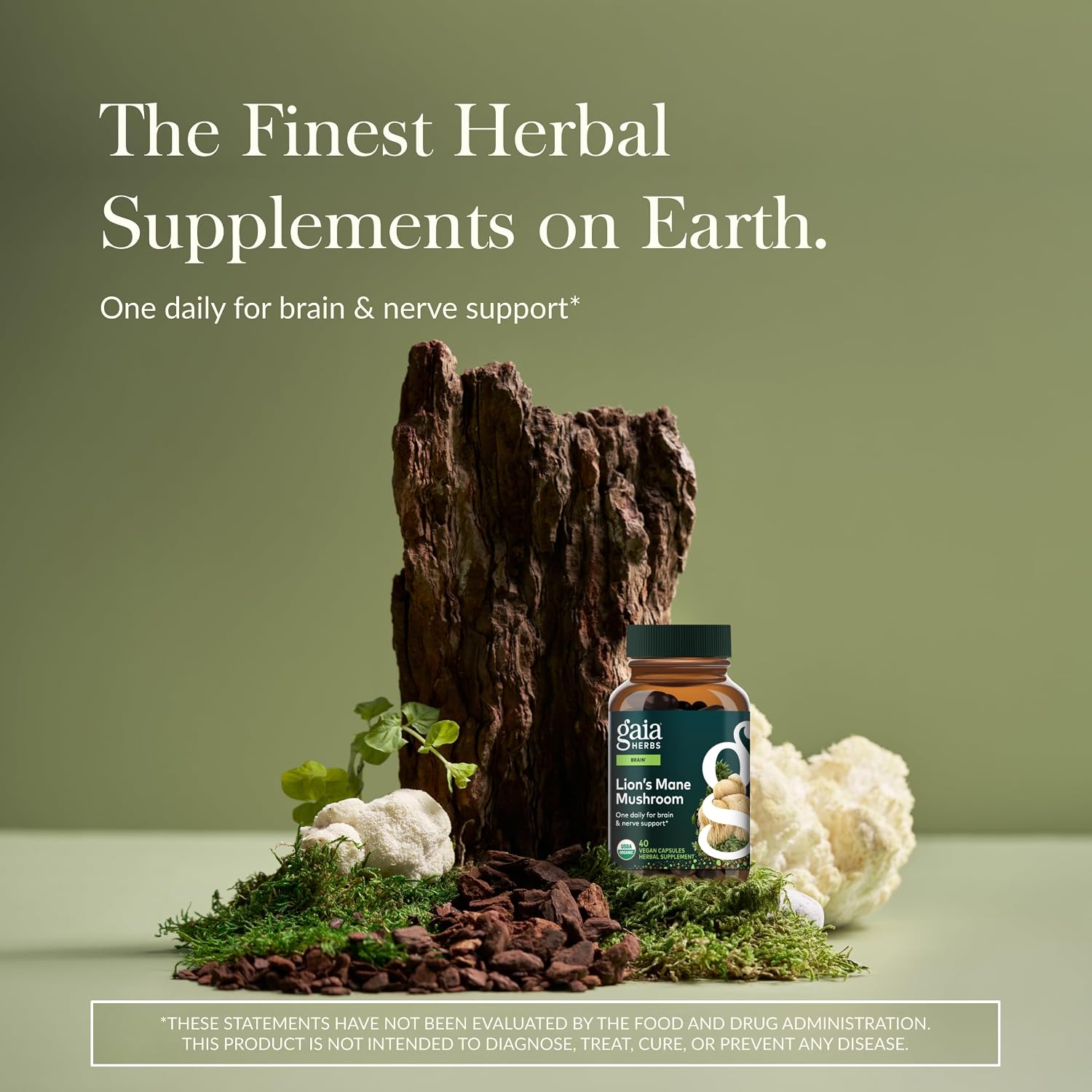
Gaia
$29.69
In stock on Amazon
Check price on AmazonPremium Tier: Third-Party Verification as the Price of Entry
Premium products — $50–$70 and above — should be held to a strict standard: third-party testing is not optional at this price point, it is the minimum justification for the cost.
Premium capsules in this tier typically offer fruiting body extract with a stated extraction ratio (8:1 or higher), a published beta-glucan percentage, and a named independent ISO-accredited lab or a certification such as NSF Certified for Sport or Informed Sport. ConsumerLab’s Mushroom Supplement Review has repeatedly documented that genuine fruiting body extracts test at 25–40%+ beta-glucan content, while mycelium-on-grain products frequently test below 10%. At $55–$70 for 60 capsules of 1,000 mg extract, cost-per-dose runs $0.92–$1.17 per 1,000 mg equivalent. That is a reasonable price when you can verify what you’re getting.
Premium tinctures at this tier command the highest cost-per-dose of any category — often $2.00–$2.89 per 1,000 mg equivalent once you do the math on a 30 mL bottle. The justification is narrow but real: if you need sublingual delivery for faster uptake, require alcohol-free glycerin-based formats for health or medication reasons, or are building a stack where precise dose splitting matters, the premium tincture from a brand with a published COA and stated mg per mL is the only responsible choice.
One non-negotiable applies across all premium products regardless of format: a heavy metals panel should be available on request or proactively published. Fungi bioaccumulate metals from their growing substrate — lead and cadmium are particular concerns. Healthline’s “What Are the Benefits of Lion’s Mane Mushrooms?” notes that sourcing and substrate quality affect contamination risk. ConsumerLab’s Mushroom Supplement Review has found products across both formats with heavy metals present above acceptable thresholds in past testing cycles. At premium prices, there is no excuse for a brand to withhold this data.
Verdict for premium tier: Premium capsules deliver the best verified cost-per-dose in the category. Premium tinctures are justifiable for specific use cases — sublingual preference, titration needs, alcohol-free formulation requirements — but only when full label transparency and a third-party COA are present. Either way, if a brand at this price point cannot produce a current third-party COA on request, the premium is unjustified.
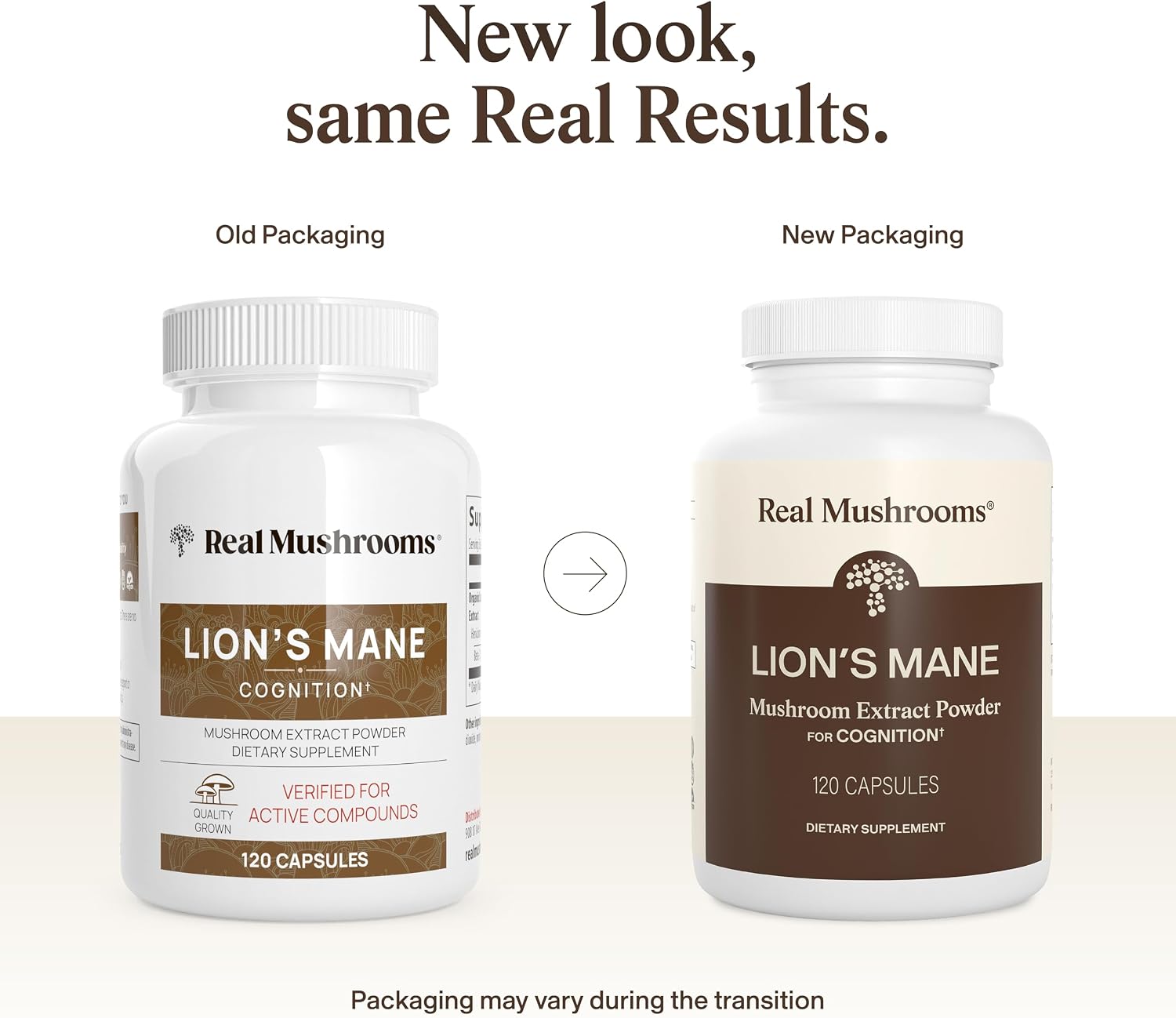
Real
$34.95
In stock on Amazon
Check price on AmazonThe Third-Party Testing Floor: Format-Agnostic and Non-Negotiable
Neither tinctures nor capsules escape the testing gap that affects the mushroom supplement category broadly. ConsumerLab’s Mushroom Supplement Review has repeatedly found products across both formats failing to deliver labeled potency or containing detectable heavy metals. The minimum verification checklist applies equally to both formats:
- Certificate of Analysis from a named third-party lab — not in-house testing. Look for NSF Certified for Sport, Informed Sport, or an ISO-accredited independent laboratory.
- Beta-glucan percentage stated on the label or COA — this is the primary functional marker for polysaccharide content. Genuine fruiting body extracts should test at 25–40%+. Products below 10% are typically mycelium-on-grain material, as ConsumerLab’s Mushroom Supplement Review has consistently documented.
- Heavy metals panel — lead, cadmium, mercury, and arsenic at minimum. Reputable brands publish this proactively.
- Extraction ratio disclosed — “8:1” means 8 kg of raw mushroom was used to produce 1 kg of extract, concentrating the active compounds. Products without this disclosure cannot be dose-compared to studied concentrations.
If a brand cannot meet these criteria regardless of format, move on. The delivery-method debate is irrelevant when the underlying compound quality is unverifiable.
Medication Interactions: Name These Before Recommending
Lion’s mane has a relatively clean safety profile in the research reviewed to date, but several interaction considerations are worth naming explicitly — both for personal use and if you’re building recommendations for others:
- Blood-thinning medications (warfarin, aspirin therapy): Preclinical data suggests lion’s mane may have mild antiplatelet activity. Healthline’s “What Are the Benefits of Lion’s Mane Mushrooms?” flags this as a reason to consult a physician before combining with anticoagulants.
- Immunosuppressants: Lion’s mane’s immune-modulating beta-glucans could theoretically interfere with immunosuppressive therapy. This population should work with their prescribing physician before adding it to a regimen.
- Diabetes medications: Some preclinical evidence indicates blood-sugar-lowering effects. Monitor accordingly when stacking with hypoglycemic agents.
These are not reasons to avoid the supplement for otherwise healthy users — they are tradeoffs to disclose, which is what separates a responsible practitioner recommendation from a sales pitch.
The Decision Rule: If X, Then Y
If you want verified dose, clean cost-per-dose math, and the widest product selection with accessible third-party COAs: choose capsules. Prioritize fruiting-body-only products with a stated extraction ratio of 8:1 or higher, a published beta-glucan percentage above 25%, and a third-party COA from a named independent lab. Cost-per-dose at clinically studied ranges typically runs $0.75–$1.20 per 1,000 mg dried-body equivalent — reasonable given the evidence base drawn from trials summarized in Examine.com’s Hericium erinaceus Research Summary.
If you’re optimizing for sublingual absorption speed, need dose flexibility to titrate slowly, or have a specific reason to avoid capsule excipients: choose a dual-extract tincture — but only from a brand disclosing exact mg per mL, specifying fruiting body as source material, and providing a third-party COA. Accept that the cost-per-dose premium is real and significant at the premium tier.
If the label doesn’t specify fruiting body or mycelium, doesn’t state an extraction ratio, and can’t produce a COA: pass on the product regardless of format. The delivery-method question is the last variable to optimize. Source material quality and third-party verification come first. Format is a refinement, not a foundation.
This article reflects editorial analysis of publicly available research, published product specifications, and third-party testing records as of May 2026. Sources cited include Examine.com’s Hericium erinaceus Research Summary, Healthline’s “What Are the Benefits of Lion’s Mane Mushrooms?”, ConsumerLab’s Mushroom Supplement Review, and Mindbodygreen’s “Fruiting Body vs. Mycelium: The Mushroom Supplement Debate Explained” — all referenced as plain-text named sources without hyperlinks per editorial policy. This article is not medical advice. Consult a qualified healthcare provider before adding any supplement to your regimen, particularly if you take prescription medications.