You have probably seen a fish oil softgel at the pharmacy — a golden oval about the size of a thumb joint, typically labeled “1,000 mg Fish Oil.” Sounds like a meaningful dose. But here’s the thing most labels bury in small print: that 1,000 mg figure describes the total weight of the oil inside, not the amount of the two active fatty acids — EPA (eicosapentaenoic acid) and DHA (docosahexaenoic acid) — that actually do the work for your brain and cardiovascular system. A standard 1,000 mg softgel often contains only 180 mg of EPA and 120 mg of DHA, for a combined 300 mg of EPA+DHA per pill. If the research-backed brain-health threshold sits at 1,000–2,000 mg of combined EPA+DHA per day (more on that number in a moment), basic arithmetic tells you that you’d need five or six of those standard pills to get there. Triple-strength, or “high-potency,” fish oil concentrates more EPA+DHA into each softgel — typically 800–1,400 mg of combined EPA+DHA per pill — so you can hit a clinical-range dose in one or two softgels instead of a fistful. This guide breaks down what that difference costs, where the quality traps are, and how to make the right call for your budget and routine.
| EDITOR'S PICKPRN Omega 3 Supplement - 120 So… | Mid-tier[Sports Research® Omega-3 Fish O…](https://www.amazon.com/dp/B01BTBZWBU?tag=greenflower20-20) | Budget pick[THORNE - Super EPA - Omega-3 Fi…](https://www.amazon.com/dp/B0018CJ17W?tag=greenflower20-20) | |
|---|---|---|---|
| Servings/Count | 120 | 180 | — |
| EPA per serving | 1680 mg | — | — |
| DHA per serving | 560 mg | — | — |
| Form (rTG/EE) | rTG | — | — |
| Vitamin D added | ✓ | — | — |
| Non-GMO | — | ✓ | — |
| Price | $76.95 | $53.95 | $41.00 |
| See on Amazon → | See on Amazon → | See on Amazon → |
Why the EPA+DHA Number Is the Only One That Matters
The marketing math on fish oil is designed to confuse. Brands lead with total fish oil milligrams because it is the biggest, most impressive-sounding number on the label. But EPA and DHA are the two long-chain omega-3 fatty acids that human clinical trials have actually studied for cognitive function, cardiovascular support, and inflammation modulation. The remainder of the oil is primarily oleic acid and other fats — not inert, but not what the dose-response research is tracking.
The clinical threshold for brain health: The NIH Office of Dietary Supplements’ Omega-3 Fatty Acids Fact Sheet for Health Professionals (updated 2024) notes that most observational and interventional research on cognitive outcomes uses combined EPA+DHA doses ranging from 1,000 mg to 2,000 mg daily, with some trials examining depression and mood endpoints using EPA-dominant formulas at 1,000–2,000 mg EPA alone. The Global Organization for EPA and DHA Omega-3s (GOED) — a trade science body that tracks the research landscape — pegs general adult health recommendations at 500 mg EPA+DHA per day as a baseline, with higher ranges used in therapeutic contexts; that figure is cited in plain text across multiple third-party reviews of the omega-3 literature. Examine.com’s Fish Oil evidence summary notes that the bulk of positive cognitive and mood findings cluster in the 1,000–2,000 mg EPA+DHA range, not at the 300 mg combined total delivered by a single standard softgel.
The EPA vs. DHA split also matters for your goal. DHA is the structural fatty acid — it makes up a substantial share of the fatty acids in your brain’s gray matter and supports neuronal membrane fluidity, as described in the NIH Office of Dietary Supplements’ Omega-3 Fatty Acids Fact Sheet for Health Professionals. EPA is the anti-inflammatory signaling molecule and carries the stronger signal in mood and depression research, per the Examine.com Fish Oil evidence summary. Most high-potency formulas tilt EPA-heavy — for example, 600 mg EPA and 400 mg DHA per softgel — which is appropriate for brain-health and mood applications. For the cognitively-focused adult audience this guide addresses, an EPA-forward ratio in the 2:1 to 3:2 range is generally consistent with the relevant trials.
The Real Cost Comparison: Standard vs. Triple-Strength
Here is where the math gets interesting — and where standard softgels stop looking like a bargain.
By the numbers (based on published label specifications and representative 2026 retail pricing):
| Format | EPA+DHA per softgel | Softgels to hit 1,500 mg EPA+DHA | Typical bottle cost (90-count) | Cost per 1,500 mg dose |
|---|---|---|---|---|
| Standard 1,000 mg softgel (~300 mg EPA+DHA) | ~300 mg | 5 softgels | $12–$18 | $0.67–$1.00 |
| Mid-potency (~600 mg EPA+DHA per softgel) | ~600 mg | 2–3 softgels | $22–$32 | $0.49–$0.72 |
| Triple-strength / high-potency (~1,000–1,200 mg EPA+DHA) | ~1,000–1,200 mg | 1–2 softgels | $35–$55 (60-count) | $0.58–$0.92 |
The cost-per-effective-dose math is tighter than the sticker price suggests. Standard softgels appear cheap until you account for the five-per-day consumption rate — a 90-count bottle becomes an 18-day supply at a clinical brain-health dose. High-potency formulas in the $40–$50 range for 60 softgels, dosed at one or two per day, typically run 30–60 days, which brings the monthly cost into a similar or even lower range than standard products consumed at therapeutic levels. The pill burden reduction is a compliance benefit, not just a convenience feature — simpler regimens consistently produce better adherence across supplement categories.
Three Formats, Three Use Cases
The following H3 sections profile each potency tier as a distinct pick, so you can match format to situation rather than defaulting to whatever is cheapest per bottle.
Budget Pick: Standard Softgels for Maintenance Dosing
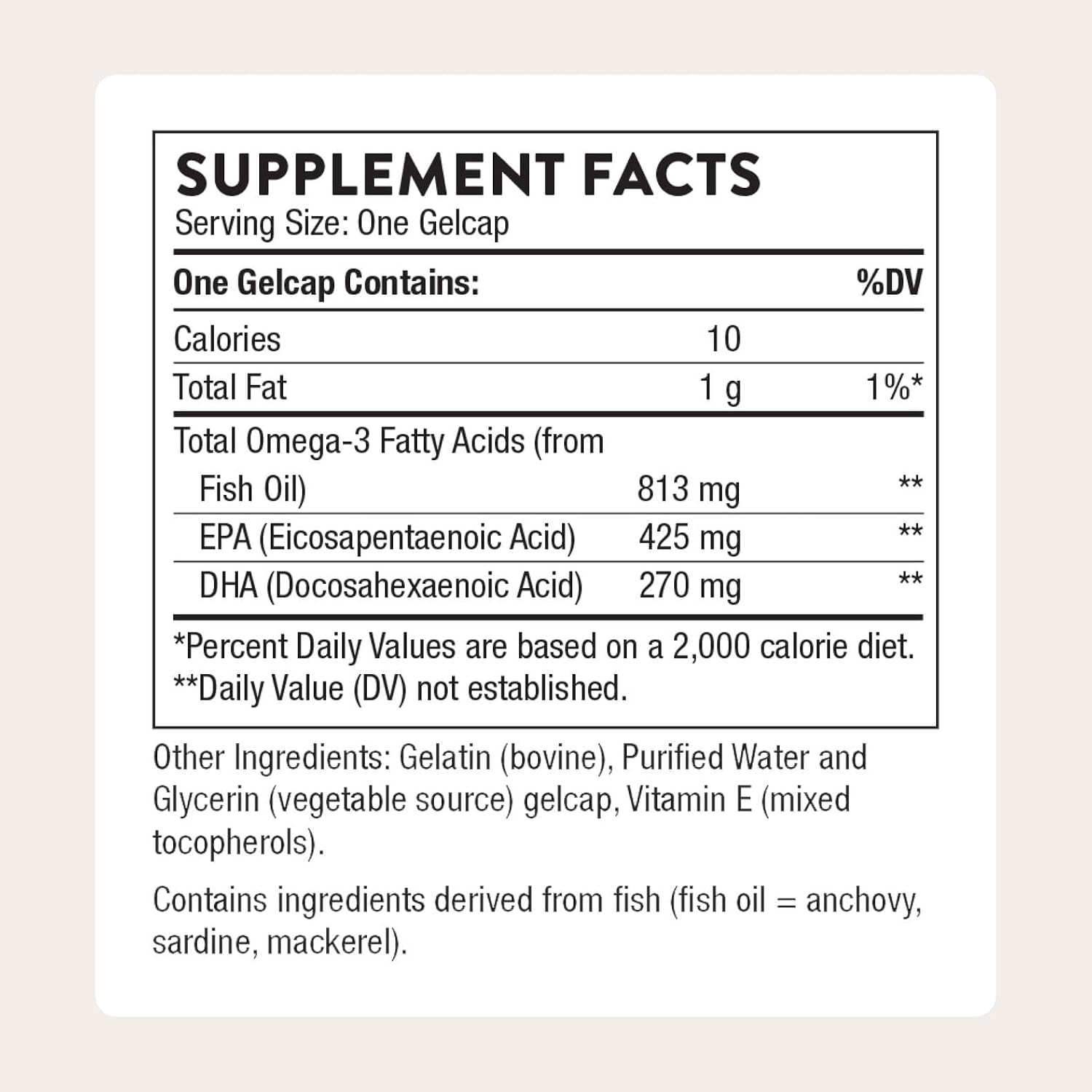
Standard 1,000 mg fish oil softgels — delivering roughly 300 mg of combined EPA+DHA per pill — are appropriate for one specific use case: a general maintenance dose of 500 mg EPA+DHA per day, which requires only two softgels. At that dose level, a 90-count bottle lasts 45 days, the per-dose cost is genuinely low, and oxidation risk is moderate because you are not burning through the bottle quickly. ConsumerLab’s Fish Oil and Omega-3 Supplements Review (2025 annual report) found that label-accuracy failures and oxidation exceedances were distributed across price tiers, meaning cheap does not automatically mean contaminated — but third-party certification (discussed below) matters regardless of price. If your goal is general cardiovascular maintenance rather than brain-health optimization, a certified standard softgel is a defensible choice.
THORNE
$41.00
In stock on Amazon
Check price on AmazonMid-Tier Pick: Double-Strength Softgels for the 1,000–1,200 mg Range
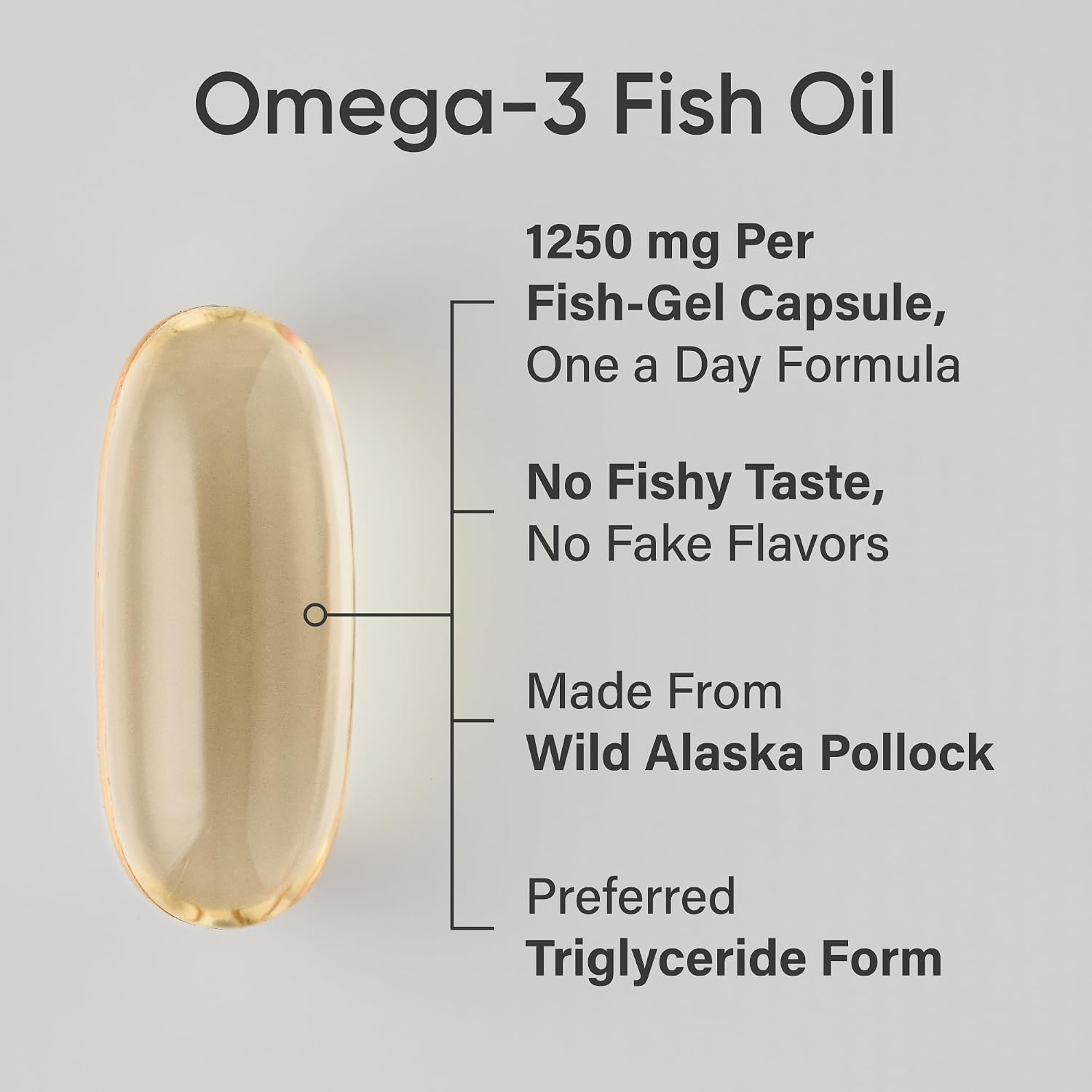
Mid-potency products — typically labeled as 1,200 mg total fish oil and delivering around 600 mg EPA+DHA per softgel — are the best compromise for buyers who want to reach a meaningful brain-health-adjacent dose without paying premium-tier prices. Two softgels per day delivers approximately 1,200 mg EPA+DHA, which sits inside the lower bound of the 1,000–2,000 mg range that Examine.com’s Fish Oil evidence summary identifies as the cluster zone for positive cognitive and mood findings. A 90-count bottle at two per day lasts 45 days. Retail pricing in the $22–$32 range makes the monthly cost competitive with standard softgels consumed at five per day. This tier is also where many IFOS-certified (International Fish Oil Standards) products concentrate, making quality verification more accessible without moving into the premium price bracket.
Sports
$53.95
In stock on Amazon
Check price on AmazonPremium Pick: Triple-Strength Softgels for Clinical-Range Dosing
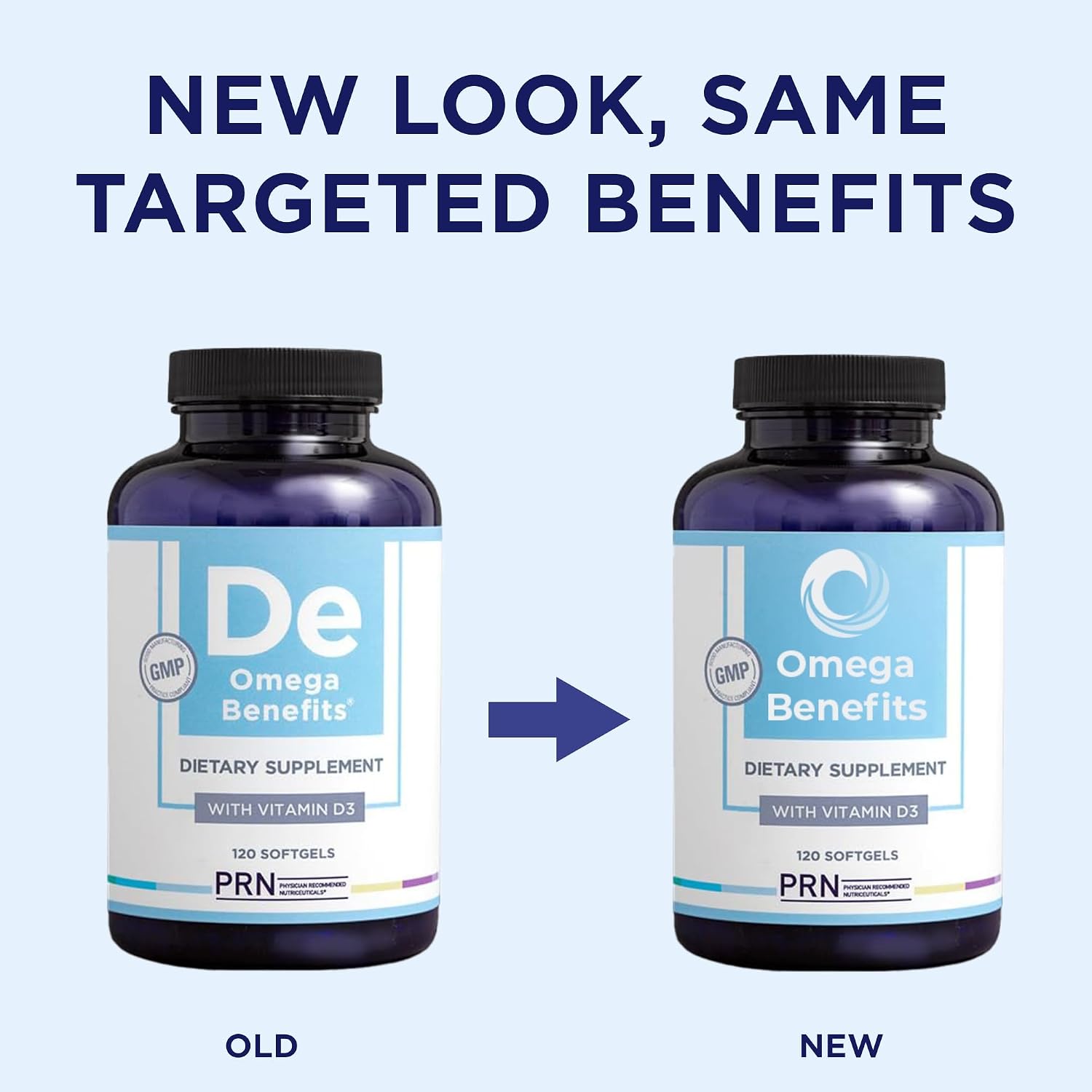
Triple-strength or high-potency formulas delivering 900–1,400 mg of EPA+DHA per softgel are the rational choice when the target is 1,500–2,000 mg EPA+DHA per day — the range used in the majority of brain-health interventional trials cited in the NIH Office of Dietary Supplements’ Omega-3 Fatty Acids Fact Sheet for Health Professionals. One or two softgels per day achieves the clinical range; the pill burden math alone justifies the higher unit price. At this tier, form factor matters more: many ultra-concentrated products are processed as ethyl esters (EE) because the concentration process is cheaper in that form. The natural triglyceride (TG) form is more bioavailable when taken without a fat-containing meal, and re-esterified triglyceride (rTG) form — concentrated, then converted back to TG — offers high potency with TG-level absorption. The Examine.com Fish Oil evidence summary discusses the bioavailability difference between these forms, noting that the gap narrows substantially when EE-form products are taken with a high-fat meal. If budget allows rTG, it removes the dietary-fat dependency entirely. If you are using an EE-form high-potency product, take it with the fattiest meal of your day.
PRN
$76.95
In stock on Amazon
Check price on AmazonWhere Quality Can Collapse — and How to Check
High-potency fish oil has two formulation vulnerabilities that matter more at higher concentrations: oxidation and form-factor bioavailability.
Oxidation. Fish oil goes rancid. Oxidized oil not only smells unpleasant but may produce adverse effects at high doses — a concern flagged in Healthline’s “How Much Omega-3 Should You Take Per Day?” (updated 2025). The more concentrated the oil, the more important antioxidant protection (typically vitamin E / tocopherols) becomes. When evaluating a high-potency product, look for three things: (1) a TOTOX value at or below 26 on the certificate of analysis (COA), which measures total oxidation — some brands publish these proactively; (2) a freshness date with meaningful shelf life remaining at time of purchase; (3) packaging that limits light exposure, such as dark bottles or blister packs. ConsumerLab’s Fish Oil and Omega-3 Supplements Review (2025 annual report) found that a meaningful percentage of fish oil products on the market exceeded acceptable oxidation benchmarks, with some showing TOTOX values two to three times the recommended ceiling. This is a real-world quality failure documented in third-party testing, not a theoretical concern.
Third-party certification. For fish oil specifically, the certifications worth prioritizing are: IFOS (International Fish Oil Standards, run by Nutrasource), which is arguably the most granular for omega-3 products because it includes oxidation markers in addition to contaminant screens; NSF International’s Certified for Sport program, which tests for label accuracy and contaminants including heavy metals, PCBs, and dioxins; and ConsumerLab verification, which tests label accuracy and dissolution. Informed Sport certification is relevant for athletes in tested sports. At minimum, look for one of these marks before buying any high-potency formula — oxidation and contamination risk are not hypothetical at this potency tier.
One More Number Worth Knowing
The omega-3 index — the percentage of EPA+DHA in your red blood cell membranes — is the biomarker that research increasingly ties to cardiovascular and cognitive risk. A value above 8% is considered cardioprotective; the NIH Office of Dietary Supplements’ Omega-3 Fatty Acids Fact Sheet for Health Professionals notes that most Americans test considerably below that range. Getting from a typical baseline into the protective zone generally requires sustained supplementation at the 1,000–2,000 mg EPA+DHA per day range for several months. Home omega-3 index tests are now available from several independent labs for $50–$75 and can serve as a personalized baseline and follow-up metric. If you are investing $40–$60 per month in a high-potency formula, testing your index at baseline and again at three to four months is the most direct way to confirm the supplement is moving your biomarker — which is, ultimately, the outcome you are paying for.
The bottom line: the label says “fish oil.” The research tracks EPA+DHA. Make sure your product, your dose, and your daily pill count are all pointed at the same number.