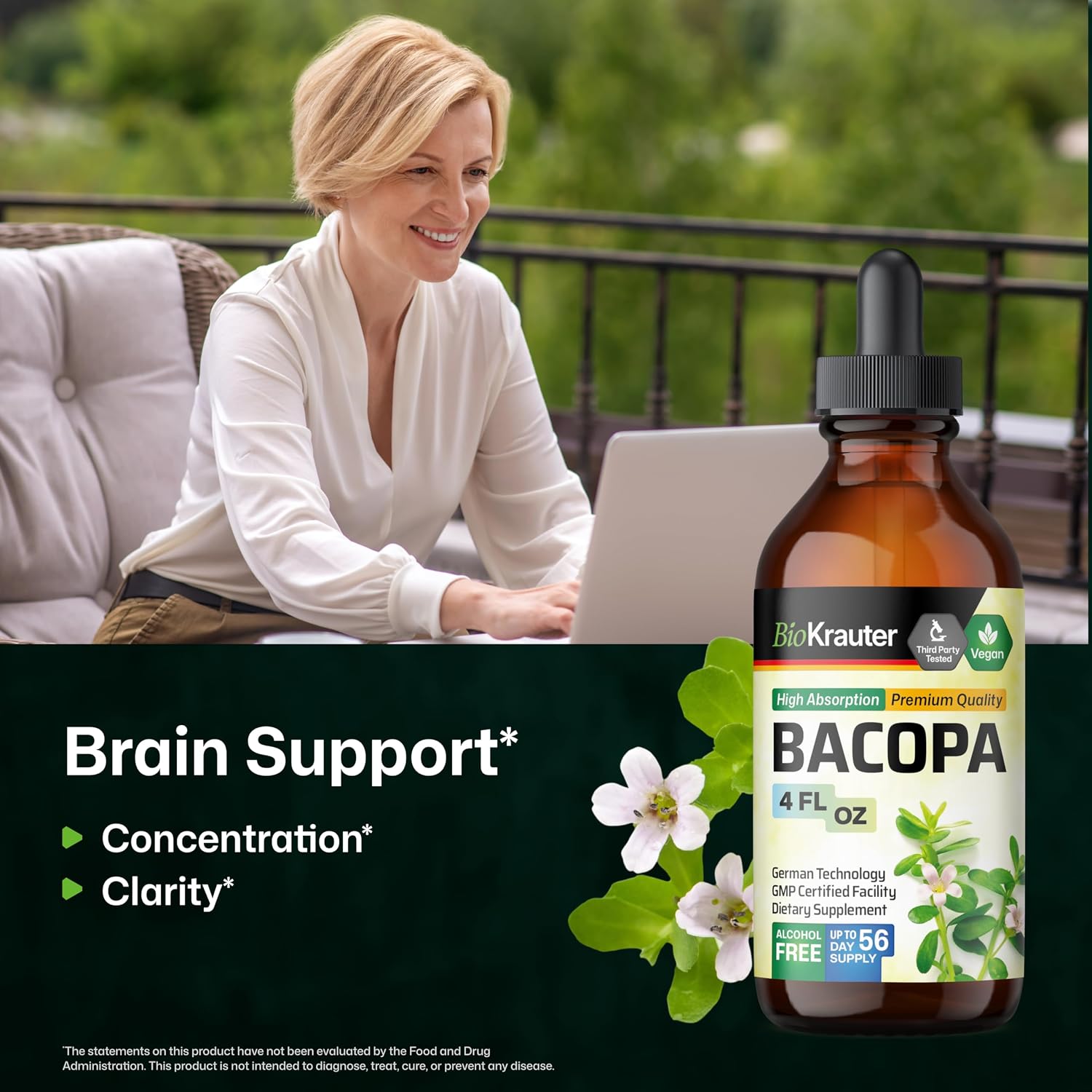
If you’ve been looking into supplements for memory support or mental clarity, you’ve probably come across Bacopa monnieri — a plant that’s been used in Ayurvedic medicine for centuries and is now one of the more rigorously studied herbal nootropics (meaning: compounds that may support cognitive function) available. Walk into any supplement aisle or scroll through a supplement retailer in 2026 and you’ll find it in two main formats: capsules, the familiar pill form, and tinctures, liquid extracts you dose by the dropperful. The obvious question is whether one actually works better than the other — or whether you’re just paying extra for a dropper bottle and a more “artisanal” aesthetic. This guide cuts through the marketing and gives you the actual tradeoffs, so you can make a decision that fits your protocol and your budget.
| EDITOR'S PICK[Pure Encapsulations Bacopa Monn…](https://www.amazon.com/dp/B0016LL9IY?tag=greenflower20-20) | Mid-tier[Nootropics Depot Synapsa Bacopa…](https://www.amazon.com/dp/B0BQWY5BB9?tag=greenflower20-20) | Budget pick[Gaia Herbs Bacopa - Brain & Cog…](https://www.amazon.com/dp/B07PD84Q5J?tag=greenflower20-20) | |
|---|---|---|---|
| Servings per Container | 180 | 60 | 60 |
| Form | Capsule | Capsule | Liquid Phyto-Capsule |
| Special Features | — | Synapsa extract | — |
| Vegan | — | — | ✓ |
| Price | $55.00 | $26.99 | $18.89 |
| See on Amazon → | See on Amazon → | See on Amazon → |
What the Research Establishes About Bacopa and Delivery Format
Let’s start with what’s known. The active compounds in Bacopa monnieri are called bacosides (specifically bacoside A and bacoside B) — these are the saponin glycosides that most of the clinical research credits for the herb’s cognitive effects, particularly in the domains of memory consolidation, stress response, and processing speed. Almost every clinical trial on Bacopa has used a standardized dry extract — typically standardized to 20–55% bacosides by weight — delivered in capsule or tablet form.
The landmark Stough et al. trial published in Psychopharmacology (2001; PubMed ID 11498727), one of the most-cited Bacopa studies, used 300 mg/day of a dry extract standardized to 55% combined bacosides. The Roodenrys et al. study in Neuropsychopharmacology (2002; PubMed ID 12093601) used a similar 300 mg/day dry extract protocol. The meta-analysis by Kongkeaw et al. in the Journal of Ethnopharmacology (2014; PubMed ID 24252493), which pooled nine randomized controlled trials, found statistically significant improvements in cognitive function — and every included trial used capsule or tablet delivery of standardized dry extract.
The blunt takeaway: There is no published clinical trial demonstrating superior cognitive outcomes from tincture delivery versus capsule delivery of Bacopa. The evidence base for Bacopa’s efficacy was built almost entirely on capsule formats. That’s not a knock on tinctures — it’s a gap in the literature that tincture marketing tends to paper over with general pharmacokinetic theory rather than Bacopa-specific data.
The Absorption Argument for Tinctures: What’s Real and What’s Speculation
Tincture advocates — and many brands selling liquid Bacopa — make a legitimate general point: liquids don’t require the same dissolution step as capsules or tablets, so active compounds can theoretically reach the bloodstream faster. Sublingual absorption (holding a liquid under the tongue, where blood vessels are close to the surface) can bypass first-pass liver metabolism for some compounds. For certain categories of supplements and medications, liquid delivery genuinely matters.
Here’s where the argument gets shakier for Bacopa specifically:
1. Bacosides are fat-soluble, not water-soluble. They require fat for efficient absorption regardless of delivery format. The standard clinical advice — documented in the Examine.com Bacopa Monnieri Research Summary (2024 revision) — is to take Bacopa with a meal containing dietary fat. A tincture suspended in water or alcohol doesn’t inherently solve the fat-solubility problem. Some tincture formulations do include carrier oils (such as MCT or olive oil) to address this, and those may be worth considering — but a plain alcohol- or glycerin-based tincture does not have a clear absorption edge over a capsule taken with food.
2. Sublingual absorption is compound-specific. The mucous membranes under the tongue absorb small, lipophilic (fat-loving), low-molecular-weight molecules efficiently. Bacosides are large, complex glycoside molecules. There is no published pharmacokinetic data showing meaningful sublingual uptake of bacosides specifically. Applying general sublingual logic to a compound where it hasn’t been studied is an extrapolation, not evidence.
3. Tinctures often have lower or harder-to-verify bacoside content. Standardized dry extracts — the capsule standard — can be assayed and labeled at a specific bacoside percentage. Many liquid tinctures list the weight of raw herb per serving, not the bacoside concentration. That’s a meaningful quality-control difference. ConsumerLab’s Cognitive Health Supplements Review (2025) has flagged labeling inconsistency in the herbal liquid supplement category as a recurring issue, with raw-herb-weight labeling making potency comparisons across products unreliable.
Format Comparison: Three Tiers of Bacopa Delivery
The market breaks into three practical segments worth evaluating on their own terms. Each serves a different buyer, and each carries distinct evidence weight, standardization transparency, and cost profile.
Budget-Friendly Capsules: The Evidence-Anchored Baseline
Standardized dry-extract capsules are the format that clinical research was actually conducted with. A typical budget-tier product delivers 300–450 mg per serving standardized to 20–45% bacosides, with labeling that allows you to calculate your actual daily bacoside intake. Monthly cost in the 2026 market generally falls between $15 and $30 for a reputable brand with third-party testing.
For a first-time Bacopa user — or anyone who simply wants to know whether the compound does anything for them before optimizing format — this is the rational starting point. You are replicating, as closely as a consumer product can, the protocols used in the Stough et al. (2001), Roodenrys et al. (2002), and Kongkeaw et al. (2014) trials. The evidence lives here.
Take with a fat-containing meal. Run the protocol for at least 8–12 weeks: the Kongkeaw et al. meta-analysis found most cognitive effects emerged over that timeframe with consistent use.
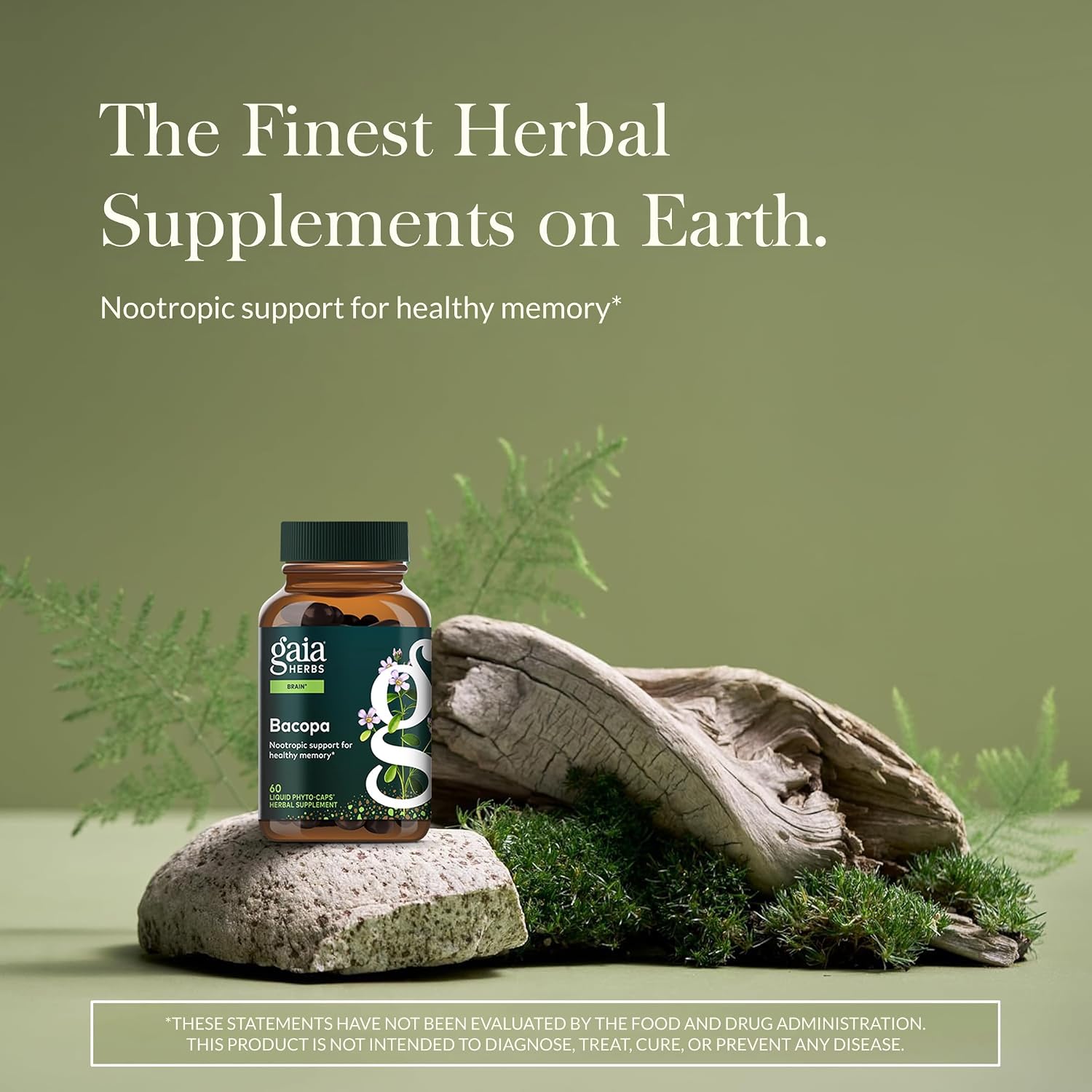
Gaia
$18.89
In stock on Amazon
Check price on AmazonMid-Tier Alcohol or Glycerin Tinctures: Convenience With Caveats
Liquid tinctures in the $30–$45 monthly range serve users who have legitimate reasons to avoid capsules — swallowing difficulty, pediatric or very-low-dose protocols, or the preference for mixing into a smoothie or shake. They also appeal to practitioners who want incremental dosing flexibility that capsule counts can’t provide.
The tradeoff is standardization transparency. Many mid-tier tinctures list raw herb weight per serving rather than bacoside percentage. Before buying, request a certificate of analysis (COA) confirming bacoside content per serving. If the brand cannot provide one, or if the answer deflects into language about “full-spectrum potency” without a specific percentage, that is a meaningful yellow flag — not because liquid Bacopa is inherently inferior, but because you cannot verify you’re hitting a therapeutic dose.
Where this tier shines practically: a glycerin-based tincture dropped into a morning smoothie that already contains nut butter, coconut milk, or full-fat yogurt addresses the fat-solubility issue while fitting a format the user already maintains. Adherence matters, and for some users this format removes friction that capsules create.
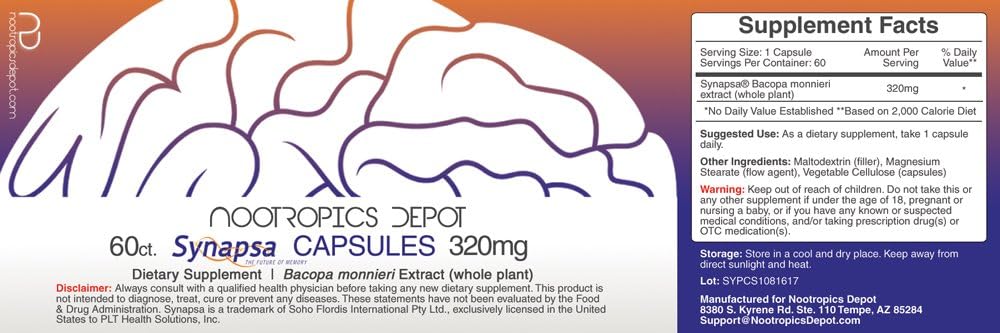
Nootropics
$26.99
In stock on Amazon
Check price on AmazonPremium Oil-Carried Tinctures: Biologically Plausible, Not Yet Trial-Proven
At the top of the market — typically $45–$65 monthly — you find tinctures that use MCT oil, olive oil, or other lipid carriers specifically to address bacosides’ fat-solubility. The rationale is coherent: fat-soluble compounds absorb more efficiently when co-formulated with fat rather than relying on the user’s meal. Some of these products also carry third-party standardization documentation and bacoside COAs comparable to capsule-market quality standards.
The honest caveat, which Examine.com’s Bacopa Monnieri Research Summary acknowledges, is that no randomized controlled trial has compared oil-based tincture delivery to capsule delivery for Bacopa cognitive outcomes. The absorption rationale is biologically plausible — it’s not fabricated — but it remains theoretical for this specific compound. You are paying a 50–100% premium over a quality capsule product for a hypothetical optimization that may or may not produce measurable cognitive differences in practice.
For a dedicated user who has already confirmed Bacopa works for their protocol, who is tracking cognitive markers systematically, and who wants to experiment with format as one more optimization variable, this is a reasonable experiment. For anyone still establishing baseline response, it is not where to start.
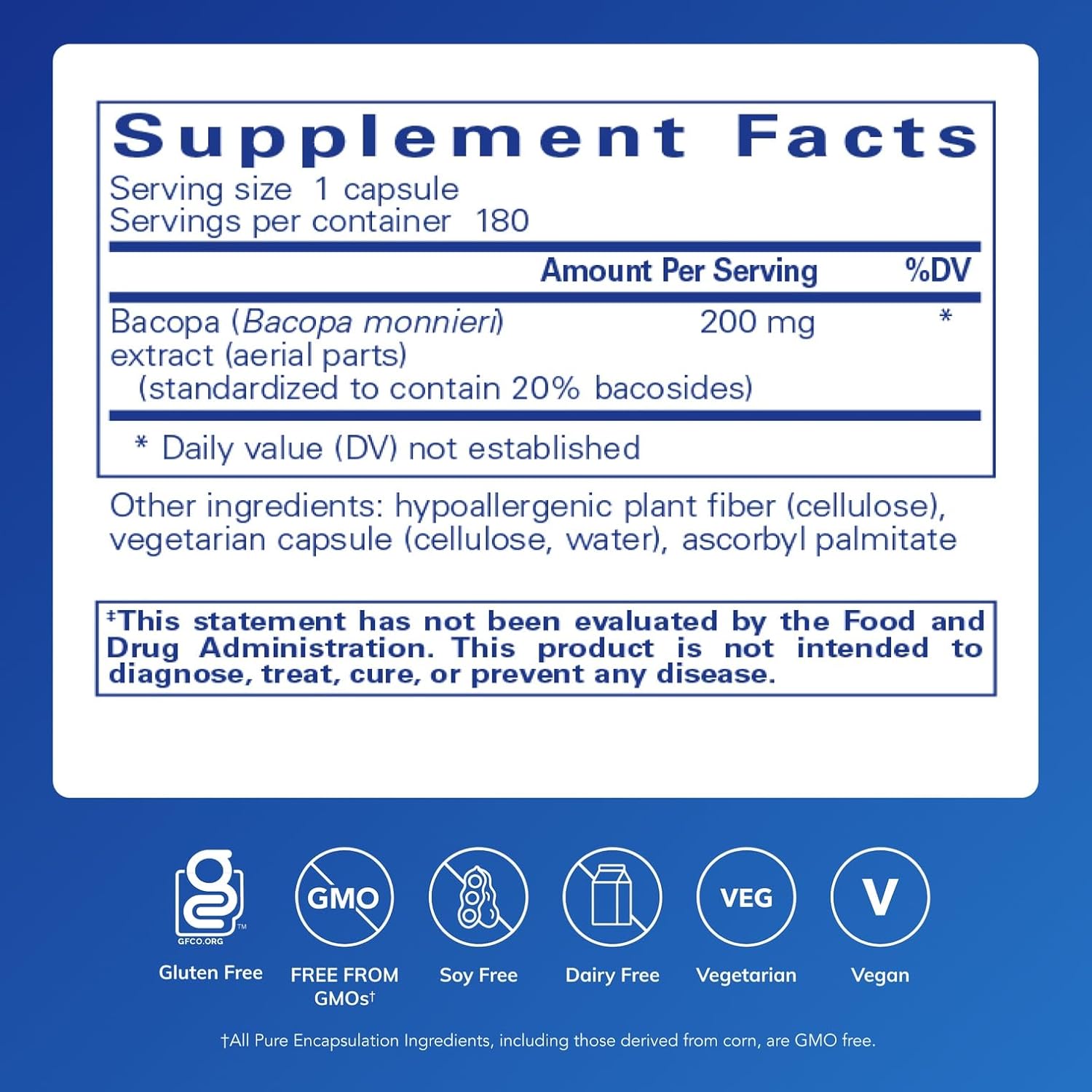
Pure
$55.00
In stock on Amazon
Check price on AmazonPractical Decision Rules: If X, Then Y
Here’s the honest framework based on the research reviewed:
If you’re new to Bacopa and want to know if it works for you: → Start with a standardized capsule (300 mg, 40–55% bacosides, third-party tested). Take it with a fat-containing meal. Run it for at least 8–12 weeks before evaluating — the Kongkeaw et al. meta-analysis (2014; PubMed ID 24252493) found most cognitive effects emerged over 8–12 weeks of consistent use. Do not pay a tincture premium until you’ve established a response baseline.
If capsule swallowing is a real barrier: → A mid-tier glycerin or alcohol tincture from a brand that can provide a bacoside COA on request is the appropriate move. Prioritize mixing it into a fat-containing drink to address the fat-solubility gap.
If you’ve already confirmed Bacopa works for your protocol and want to experiment with format: → A well-formulated oil-based tincture with documented bacoside content is a biologically plausible next step. The absorption edge is not yet trial-proven for this compound, but the mechanism is coherent. Track your own markers.
If you’re a practitioner recommending at scale: → Default to capsules with verified standardization for client populations. The evidence base lives there, the labeling is more transparent, the price-per-dose is lower, and compliance is typically higher when a product fits easily into an existing supplement routine.
If a tincture lists only raw herb weight with no bacoside percentage and no COA available on request: → Pass, regardless of format preference or price. You cannot verify you’re hitting a dose that corresponds to the clinical literature.
The Pricing Reality Check
To make the cost comparison concrete: a reliable, third-party-tested Bacopa capsule standardized to 300 mg at 40–55% bacosides typically runs $15–$35 for a 60-count bottle — one to two capsules per day — putting the effective monthly cost at $15–$35. That range tracks directly with protocols validated in the trials reviewed above.
A quality tincture with a COA and stated bacoside content runs $30–$65 monthly depending on formulation. The premium is real: 50–100% more per effective dose. For that premium, you are purchasing format convenience and — in the oil-carrier tier — a theoretically optimized fat-delivery mechanism. You are not purchasing proven superior outcomes over the capsule format, because that trial data does not exist for Bacopa as of mid-2026.
The delivery-format debate in the supplement industry functions, too often, as a marketing lever rather than a genuine pharmacokinetics conversation. Bacopa tinctures are a clear example: the underlying compound is legitimate, the research on capsule delivery is solid, and liquid formats have real use cases for specific populations. But the absorption premium that tincture marketing implies is not supported by Bacopa-specific trial evidence. Let the clinical literature anchor your format choice — and let your specific situation, not the packaging, justify any premium you pay.