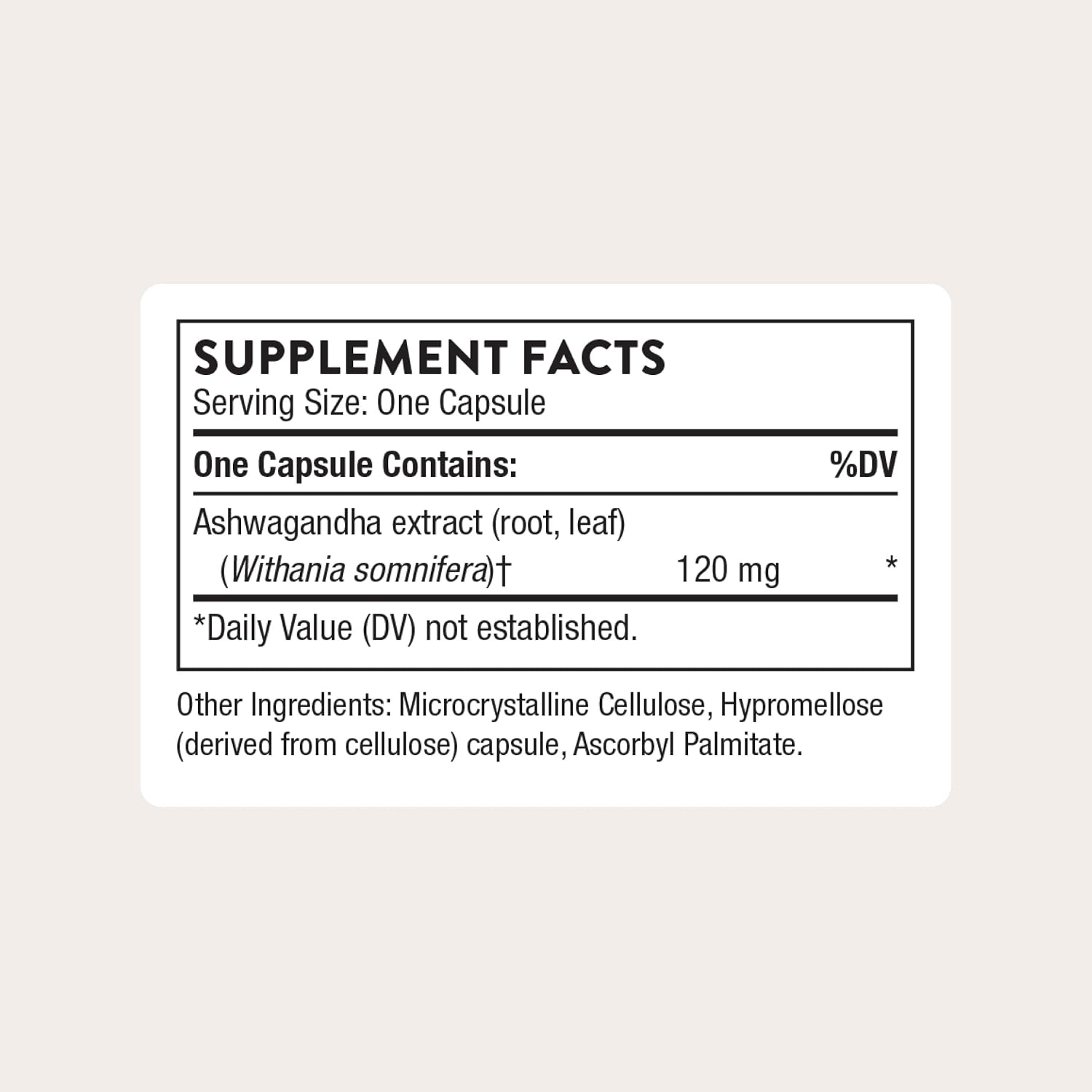
You’ve probably seen the word ashwagandha on enough supplement labels by now that it’s lost its exotic edge. But here’s what most labels don’t tell you: “ashwagandha” on the front panel could mean almost anything — a carefully standardized pharmaceutical-grade root extract backed by a dozen human trials, or a ground-up root powder with no meaningful quality controls and a fraction of the active compounds. The gap between those two products in your body can be enormous. Ashwagandha is an adaptogenic herb, meaning it helps your body modulate its response to stress, particularly by influencing cortisol — the hormone your adrenal glands release under pressure. The plant’s therapeutic punch comes primarily from compounds called withanolides, a family of naturally occurring steroidal lactones concentrated in the root. The higher the standardized withanolide percentage, the more of the active material you’re actually getting per capsule. This guide breaks down the three forms you’ll encounter most — KSM-66, Sensoril, and generic root powder — so you can make a fast, confident decision.
The Three Tiers: What You’re Actually Buying
Before getting into the numbers, here’s the frame: ashwagandha extract quality is a three-tier market, and the tiers don’t overlap as much as brands would have you believe. Each tier has meaningfully different evidence, dosing logic, and quality-control expectations.
KSM-66: The Root-Only Research Standard
KSM-66 is a patented, full-spectrum root extract made by Ixoreal Biomed. It’s produced using a proprietary milk-based extraction process and standardized to a minimum of 5% withanolides by HPLC analysis. It uses only the root — no leaf, no stem — which matters because the leaf contains a different withanolide and alkaloid profile with less research support for stress and cortisol outcomes. KSM-66 is the most-studied branded ashwagandha on the market, with over 22 human clinical trials completed as of 2025.
The landmark evidence for this tier comes from the 2012 Chandrasekhar et al. placebo-controlled trial, published in the Indian Journal of Psychological Medicine and indexed on PubMed (PMID 23439798). That trial used KSM-66 at 300 mg twice daily and found statistically significant reductions in serum cortisol and perceived stress scores versus placebo over 60 days — one of the few ashwagandha studies to measure cortisol biochemically rather than relying solely on self-reported scores. For practitioners whose clients present with documented high-cortisol patterns from morning cortisol panels or DUTCH testing, this is the data point most worth citing.
 product image](/images/external/0412c5fc043e.jpg)
Himalaya
$21.99
In stock on Amazon
Check price on AmazonSensoril: The Lower-Dose, Dual-Standardized Option
Sensoril is a patented extract made by Natreon Inc., standardized to ≥10% withanolides plus ≥32% oligosaccharides. Unlike KSM-66, Sensoril uses both root and leaf material, which partly explains why its withanolide percentage reads higher. It is also supported by human trial data, but at lower doses — typically 125–250 mg per day, versus KSM-66’s 300–600 mg per day range.
The dose math is worth working through explicitly. Because Sensoril is standardized to ≥10% withanolides, a 250 mg capsule delivers approximately 25 mg of withanolides. KSM-66 at 5% withanolides in a 600 mg dose delivers approximately 30 mg. At their respective clinical doses, they deliver roughly comparable amounts of the active compound. Sensoril’s lower per-capsule dose is not inferior — it is differently calibrated. Where Sensoril has a practical edge is pill burden: clients who already carry complex supplement protocols often prefer two smaller capsules over two larger ones.
Sensoril’s second standardization marker — oligosaccharides — is a carbohydrate class that may contribute to adaptogenic effect via gut-brain axis pathways. The Examine.com ashwagandha research summary (Examine.com, Ashwagandha [Withania somnifera] — Research Summary, accessed 2026) notes this as a plausible hypothesis, but the mechanism is not yet trial-confirmed at the dose levels found in Sensoril products. Sensoril’s calmer, lower-dose profile also makes it a natural fit for PM-formulated products targeting sleep architecture rather than daytime cortisol management.
 product image](/images/external/a265f4d32509.jpg)
NaturaLife
$16.95
In stock on Amazon
Check price on AmazonGeneric Root Powder: The Unstandardized Baseline
Generic root powder — sometimes labeled “ashwagandha root extract” or “Withania somnifera root” without any branded designation — typically contains 1–2.5% withanolides by weight. This varies considerably and is often not third-party verified. The ConsumerLab.com Ashwagandha Supplements Review (2024–2025 update) found that a meaningful number of generic ashwagandha products either failed to meet their labeled withanolide claims or provided no standardization data whatsoever.
The real problem with generic powder is not simply that withanolide content is lower — it’s that the absence of standardization documentation makes reliable dosing impossible. A product that says “500 mg ashwagandha root extract” with no percentage listed could be delivering anywhere from 5 mg to 25 mg of withanolides, depending on how minimally or aggressively the material was extracted. Without a Certificate of Analysis (COA) from a third-party lab confirming withanolide percentage, that label number is marketing language, not a clinical quantity. Healthline’s overview of ashwagandha safety and efficacy (Ashwagandha Benefits, Dosage, and Safety, reviewed 2024) identifies the lack of standardization in lower-cost products as one of the primary drivers of inconsistent consumer outcomes.
The Pratte et al. 2014 systematic review, published in the Journal of Alternative and Complementary Medicine and indexed on PubMed (PMID 25405876), analyzed eight human trials on ashwagandha and found that studies using standardized extracts produced consistent efficacy findings, while unstandardized preparations showed inconsistent results. That pattern in the peer-reviewed literature is your clearest argument against generic powder in any structured protocol.
Nature's
$9.74
In stock on Amazon
Check price on AmazonBy the Numbers: Withanolide Comparison
| Form | Source Material | Withanolide % | Typical Clinical Dose | Est. Cost/Day (2026) |
|---|---|---|---|---|
| KSM-66 | Root only | ≥5% | 300–600 mg/day | $0.45–$0.90 |
| Sensoril | Root + leaf | ≥10% | 125–250 mg/day | $0.35–$0.75 |
| Generic root powder | Root (varies) | 1–2.5% (often unstandardized) | Unknown / unreliable | $0.08–$0.25 (efficacy uncertain) |
Cost-per-dose estimates based on mid-2026 retail pricing across major supplement retailers. Actual costs vary by brand, bottle size, and subscription pricing.
The Root-Only Debate and What the Research Actually Resolves
The research community continues to debate whether leaf-derived withanolides behave identically to root-derived withanolides in terms of bioavailability and mechanism. KSM-66’s clinical data is entirely root-specific, and Ixoreal argues that leaf compounds introduce inconsistency. Sensoril’s manufacturer counters that dual standardization provides a broader phytochemical matrix. The honest answer, as summarized in the Examine.com Ashwagandha Research Summary (accessed 2026), is that no head-to-head study has cleanly isolated this variable. For clients specifically targeting cortisol modulation and stress resilience, the KSM-66 trial record is deeper, longer-running, and more outcome-specific.
For cognitive performance specifically, a 2017 randomized, double-blind, placebo-controlled trial by Choudhary et al., published in the Journal of Dietary Supplements and available via PubMed, used KSM-66 at 300 mg twice daily and found significant improvements in immediate and general memory, executive function, and information processing speed after eight weeks. Effect sizes were modest but consistent across cognitive domains. This is the relevant reference point for clients — often executives or high-performance professionals — who ask about ashwagandha specifically for focus rather than stress management.
For sleep quality, a 2019 randomized trial by Langade et al., published in Cureus and indexed on PubMed, found significant improvements in sleep quality, sleep onset latency, and morning alertness with KSM-66 at 300 mg at bedtime. Sensoril’s low-dose, calmer profile also positions it well in sleep-focused PM stacks. If a client’s primary concern is sleep architecture rather than daytime stress load, a Sensoril-based PM formulation is a defensible choice with reasonable trial support.
Third-Party Testing: The Filter That Actually Matters
Even within branded extracts, the supplement you recommend is only as good as the quality controls on the finished product — not just the raw ingredient certification. KSM-66 and Sensoril as raw materials both come with Certificates of Analysis from their respective manufacturers. But the supplement brand that purchases and encapsulates that extract may or may not conduct finished-product testing for heavy metals, microbial contamination, and label accuracy.
Look for these certifications on the finished product label before recommending or procuring:
- NSF Certified for Sport — tests for banned substances and label accuracy; most rigorous standard, common in professional-athlete-adjacent products
- Informed Sport — equivalent to NSF for this purpose; common in UK-sourced brands distributed in North America
- ConsumerLab.com approval seal — consumer-facing lab verification of label claims and contaminants
- USP Verified — less common in the nootropic and adaptogen space but meaningful when present
The ConsumerLab.com Ashwagandha Supplements Review (2024–2025) found that several branded products using KSM-66 passed finished-product verification, while multiple generic ashwagandha products failed to meet labeled withanolide amounts. That gap is the due diligence argument for spending the additional $15–25 per bottle on a third-party verified product.
The Decision Framework
If you’re working through a current recommendation, procurement decision, or protocol build, here’s the if/then logic based on the research reviewed above:
If your client’s primary goal is daytime stress resilience and cortisol management: Recommend a finished product using KSM-66 at 300–600 mg per day with a third-party verification mark. This is the deepest trial record for this specific outcome, anchored by the Chandrasekhar et al. 2012 biochemical cortisol data (PubMed PMID 23439798).
If your client has high pill burden or wants a PM-focused formulation: Sensoril at 125–250 mg per day is a reasonable, evidence-supported choice. Its lower dose and calmer profile make it the better fit for evening-use stacks targeting sleep onset and quality.
If a client is on an SSRI or thyroid medication: Flag this for their prescribing physician before recommending ashwagandha. The Examine.com Ashwagandha Research Summary (accessed 2026) notes potential interactions with thyroid hormone medications and sedatives; the interaction picture with serotonergic drugs is not fully characterized. Default to the prescriber.
If someone pushes back on price and wants a generic: The honest answer is that without standardization documentation and third-party verification, you cannot confidently dose it. The $0.10-per-day savings is not worth the efficacy uncertainty in any structured protocol. This is a case where cheaper isn’t just less effective — it’s unmeasurable.
If you’re procuring at scale for a corporate wellness program: Require a finished-product COA, not just the ingredient supplier’s documentation, and specify KSM-66 or Sensoril by name in the procurement specification. Generic “ashwagandha extract” as a category in bulk procurement is a quality-control gap that creates liability and inconsistent participant outcomes.
The bottom line: ashwagandha is one of the few adaptogens with a genuinely respectable human clinical trial record. But that record belongs to specific standardized extracts at specific doses — not to the ingredient category as a whole. The label does the lying. The withanolide percentage and the third-party seal tell the truth.